


In 2020, the Spanish Society of Rheumatology (SER) and the Spanish Society of Pulmonology and Thoracic Surgery (SEPAR) published joint recommendations on the management of rheumatoid arthritis-associated interstitial lung disease (RA-ILD). Since then, new evidence has emerged supporting an update focused on treatment.
MethodsA systematic literature review was conducted covering the period from October 2020 to October 2025.
ResultsL-6 and JAK inhibitors (JAKi) show efficacy comparable to rituximab (RTX) and abatacept (ABA) in controlling joint disease, preserving pulmonary function, limiting radiological progression, and reducing RA-ILD-related mortality, without a significant increase in serious respiratory events. ABA has not demonstrated a lower risk of severe or opportunistic infections; therefore, these four options (ABA, RTX, anti-IL6, and JAKi) may be used interchangeably in RA-ILD patients requiring treatment intensification. In those with a progressive fibrosing phenotype and intolerance to nintedanib, pirfenidone may be considered.
ConclusionsRecent evidence has expanded the therapeutic options available for RA-ILD.
En 2020, la SER y la Sociedad Española de Neumología y Cirugía Torácica (SEPAR) publicaron recomendaciones conjuntas sobre el manejo de la enfermedad pulmonar intersticial difusa asociada a la artritis reumatoide (EPID-AR). Desde entonces, ha surgido nueva evidencia que justifica una actualización centrada en su tratamiento.
MétodosSe realizó una revisión sistemática de la literatura entre octubre de 2020 y octubre de 2025.
ResultadosLos inhibidores de IL-6 y de JAK (JAKi) muestran eficacia comparable a rituximab (RTX) y abatacept (ABA) en el control articular, la estabilización funcional, la progresión radiológica y la mortalidad asociada a la EPID, sin aumento significativo de eventos respiratorios graves. No se ha demostrado que ABA reduzca el riesgo de infecciones graves u oportunistas, por lo que las cuatro opciones pueden emplearse indistintamente en pacientes con EPID-AR que requieran intensificar el tratamiento. En casos con fenotipo fibrótico progresivo e intolerancia a nintedanib, puede considerarse pirfenidona.
ConclusionesLa evidencia reciente amplía las opciones terapéuticas disponibles para la EPID-AR.
Rheumatoid arthritis-associated interstitial lung disease (RA-ILD) is a serious extra-articular manifestation that is associated with increased morbidity, mortality, and healthcare costs.1–4 Its clinical management remains challenging, given the very few randomised controlled trials (RCTs) that specifically evaluate the efficacy of available treatments.
With the aim of facilitating decision-making in clinical practice, in 2020 the Spanish Society of Rheumatology (SER) and the Spanish Society of Pulmonology and Thoracic Surgery (SEPAR) drew up the first recommendations for the management of RA-ILD, based on the scientific evidence available up to October 2020.5,6 Eighteen recommendations were formulated, 12 of which focused on the treatment of this complication.
As part of the process to update the Clinical Practice Guidelines for the Management of Patients with Rheumatoid Arthritis (GUIPCAR),7 promoted by the SER, a systematic review of scientific advances published since the 2019 version has been conducted.
This article aims to summarise the new scientific evidence on the treatment of AR-ILD published since the SER-SEPAR recommendations in specific terms, in order to align them with the most recent data. Consequently, three recommendations have been amended and a fourth clarified; the remaining sections of the original recommendations remain in force and have not been revised.
MethodsResearch question and search studyDuring the development of GUIPCAR 2025, the research question from the SER-SEPAR recommendations document5,6 regarding which drugs have been shown to be effective, efficacious, and safe for treating RA-ILD was updated to incorporate recent evidence.
A search was conducted of the scientific literature published between October 2020 (date on which the SER-SEPAR recommendations were drawn up) and June 2024. The search also included relevant studies published later, up to October 2025. For this purpose, the PubMed (Medline), Embase, and Cochrane Library (Wiley Online) databases were used. The process was supplemented by a manual search of the references in the identified studies and the references provided by experts. There were no language restrictions, although priority was given to articles in English or Spanish. Observational studies, clinical trials, systematic reviews, and meta-analyses were included, with no requirement for a minimum follow-up period or minimum sample size.
The question was formulated using the PICO format: Population, Intervention, Comparator, and Outcome. Included studies had to meet the following criteria:
- •
Population. Adult patients (≥18 years) diagnosed with RA-ILD (2010 ACR/EULAR criteria).
- •
Intervention.
- -
Treatment with biologic disease-modifying antirheumatic drugs (bDMARDs).
- -
Treatment with JAK inhibitors (Jaki).
- -
Treatment with antifibrotics: pirfenidone and nintedanib.
- -
Treatment with conventional synthetic DMARDs (csDMARDs) or immunosuppressants: mycophenolate, azathioprine, tacrolimus, cyclosporine, cyclophosphamide, leflunomide, and methotrexate.
- -
Treatment with glucocorticoids (GC): prednisone or methylprednisolone.
- -
- •
Comparator. Treatment with any of the drugs included in the intervention or placebo.
- •
Outcome measures.
- -
Survival/mortality.
- -
Deterioration in pulmonary function tests (PFTs) or the 6-minute walk test, progression of radiological lesions on chest computed tomography (CT), worsening of the GAP index.
- -
Improvement in activity, impact, functional capacity, and quality of life, assessed using patient-reported outcomes (PROs): SF-36, HAQ-DI, and the Saint George’s Respiratory Questionnaire (SGRQ -I).
- -
The quality of the systematic reviews was assessed using the AMSTAR-2 tool (A Measurement Tool to Assess Systematic Reviews 2) and the risk of bias in observational studies was assessed using the ROBINS-E tool (Risk of Bias in Non-Randomised Studies).
Assessment of the quality of the evidenceThe quality of the evidence was assessed using the GRADE methodology (Grading of Recommendations Assessment, Development, and Evaluation).8 The evidence was classified into four levels (high, moderate, low, or very low) based on its ability to change the effect estimate.
Formulation of recommendationsFollowing the critical review of the evidence, the drafting group proceeded to formulate specific recommendations based on it. The strength and direction of the recommendations were graded using the GRADE system. In the absence of formal evidence, some recommendations were formulated as good clinical practice (GCP) through professional consensus.
ResultsNew data on the efficacy and safety of bDMARDsInterleukin-6 (IL-6) inhibitorsThere are currently three observational studies available that evaluate the safety and efficacy of anti-IL-6 therapies in patients with RA-ILD. In a retrospective multicentre study, Manfredi et al.9 analysed 28 patients treated with tocilizumab (TCZ) with a mean follow-up of 30 months. Forced vital capacity (FVC) and diffusing capacity of the lungs for carbon monoxide (DLCO) remained stable in 56%, improved in 20%, and worsened in 24% of cases, while pulmonary computed tomography (CT) showed radiological stability in 89% of patients.
Another Japanese study10 involving 55 patients, found that treatment with TCZ was associated with a significant improvement in levels of matrix metalloproteinase-3 (MMP-3, a biomarker of synovial activity) and Krebs von den Lungen-6 (KL-6, a biomarker of lung damage). At one year, MMP-3 continued to decrease, whilst KL-6 showed no further changes. Cumulative mortality was 2% at one year, 16.7% at two years, and 32.4% at three years; this was attributed to acute exacerbations in all cases. These findings suggest an initial benefit on joint and pulmonary activity, but no clear modifying effect on the progression of ILD.
Finally, a retrospective study of the Japanese KEIO-RA cohort evaluated sarilumab in 21 patients with RA-ILD over a 24-month period, showing radiological stability in 85.7% and improvement in 9.5%. KL-6 levels remained stable or improved in the majority of patients (96.2%), with no serious adverse events reported.11
To conclude this section, a real-world observational study with propensity score matching (1194 patients per group) and a 5-year follow-up has recently been published, comparing CTZ and rituximab (RTX), and no significant differences were observed in all-cause mortality (HR: 1.073). Secondary outcomes, including hospitalisation and mechanical ventilation, were comparable.12
JAK inhibitorsThree studies have assessed the risk of incident ILD in RA patients treated with JAKi. Two of these are post hoc analyses based on pooled data from RCTs (phases 1, 2, and 3) and long-term extension studies of tofacitinib (TOFA)13 and baricitinib (BARI).14 The reported incidence rates were.18 and .17 per 100 patient-years, respectively. These figures do not exceed the estimated incidence in the general population with RA, which ranges from 1.05 to 4.1 cases of ILD per 1000 patient-years.15,16
The strongest evidence for a potential beneficial effect of JAK inhibitors in RA-ILD comes from a US retrospective cohort study involving more than 28,000 RA patients.17 Among the various treatments, TOFA had the lowest incidence of ILD (1.47 per 1000 person-years), with a 69% reduction in risk compared with patients treated with adalimumab (adjusted hazard ratio .31).
In addition, nine observational studies18–26 and one meta-analysis.27 have been published. The latter included ten studies,13,14,17–24 in which most patients were treated with TOFA or BARI, although cases treated with upadacitinib (UPA) and filgotinib (FILGO) were also included. The results suggest that JAKi are associated with a modest but significant improvement in pulmonary function tests, with a combined increase of 2.07% in FVC and 3.12% in DLCO, as well as radiological improvement in at least 11% of cases. The proportion of worsening of pre-existing ILD was 5%, and the risk of de novo ILD was low (.20 per 1000 person-years). Adverse effects were observed in 14% of patients, with clinically relevant infections ranging from 4.5% to 25%.27 The efficacy and safety were comparable to those observed with abatacept (ABA)21–23 and RTX.20
Two subsequent studies, which were not included in the meta-analysis, provide additional information. The French prospective MAJIK-SFR registry study,25 included 42 patients treated with TOFA, BARI, UPA, or FILGO, and observed stabilisation of respiratory function, with radiological stability in 69% and progression in 19%. The treatment discontinuation rate was 40.5%. A Spanish multicentre retrospective study including 72 patients treated with BARI and mostly refractory to bDMARDs, observed stabilisation or improvement in FVC in 88%, in DLCO in 65%, and in pulmonary CT in 72%. Serious adverse events were infrequent (16.7%), and the retention rate was 67%.26
AbataceptSince the publication of the SER-SEPAR guidelines, three observational studies (two of which were multicentre) have been published that support the existing evidence on the use of ABA in RA-ILD.28–30 Atienza-Mateo et al.28 analysed the drug’s effectiveness in a cohort of 190 patients with RA-ILD, distinguishing between the radiological patterns of usual interstitial pneumonia (UIP) (n = 106) and non-specific interstitial pneumonia (NSIP) (n = 84). After 24 months of treatment, FVC and DLCO remained stable in both groups, with improvement or stabilisation of lesions on pulmonary CT and improvement in dyspnoea in over 70% of cases. These results suggest comparable efficacy of ABA in UIP and NSIP, and suggest that its early administration could halt the progression of RA-ILD, regardless of the radiological pattern.
In another prospective multicentre study, Mena-Vázquez et al.29 evaluated the safety and effectiveness of ABA in 57 patients with RA-ILD treated between 2015 and 2021. After a median follow-up of 27.3 months, the disease improved or stabilised in 71.9% of cases, whilst 22.8% showed progression and 5.3% died. No significant decreases in FVC or DLCO were observed. The rate of serious adverse events was 10.5%, indicating a favourable safety profile for ABA.
Finally, a Japanese retrospective observational study evaluated the therapeutic efficacy of ABA in 38 patients with RA-ILD using pulmonary CT.30 After one year of treatment, a reduction in ground-glass opacities was observed in patients with UIP-like and non-UIP-like patterns (p = .008 and p < .002, respectively.
As further evidence of ABA’s efficacy, a systematic review comprising nine observational studies found radiological improvement or stabilisation of ILD in 76.6%–92.7% of cases and stability of FVC or DLCO in over 85%, with lower rates of pulmonary deterioration compared with TNF-alpha inhibitors (TNFi).31 In a post hoc safety analysis of 10 phase III RCTs, treatment with ABA + MTX was associated with an ILD rate approximately four times lower than with PBO + MTX (.10 versus .43 per 100 person-years; IRR 4.49; 95% CI: 1.23–13.42).32
RituximabThe only new development regarding RTX is the publication of a meta-analysis based on 15 studies, involving a total of 314 patients.33 The analysis showed that 88% of patients achieved stabilisation or improvement of their ILD after one year of treatment. Furthermore, RTX achieved a significant increase in FVC of 7.5% and in DLCO of 6.4%.
Comparative studies between bDMARDsA systematic review with meta-analysis investigated the association between different treatments and the risk of developing RA-ILD, based on data from 40 studies (24 RCTs), involving a total of 486,465 patients with RA and 3928 incident cases of ILD.34 The results of the RCTs showed no statistically significant differences in the risk of developing ILD with any specific drug, including methotrexate (MTX), TNFi, TCZ, TOFA (Oral Surveillance study), and BARI. In observational studies, the use of MTX was associated with a possible protective effect, with a 51% reduction in the odds of developing ILD (OR: .49). Furthermore, a significant 64% reduction in the odds of developing ILD was observed when comparing TOFA with adalimumab.
An observational study based on registries and administrative databases from Sweden, Germany, the United States, and Canada assessed the risk of serious and opportunistic infections, including tuberculosis, in RA patients treated with ABA, compared with csDMARDs or other bDMARDs/tsDMARDs.35 The study included 6450 patients treated with ABA, 136,636 with csDMARDs, and 54,378 with other bDMARDs/tsDMARDs, with a mean follow-up of between 2.2 and 6.2 years. After adjusting for demographic variables, comorbidities, and confounding factors, no statistically significant differences were observed in the risk of hospitalisation due to infection, with adjusted rate ratios of 1.2 compared with csDMARDs and .9 compared with other bDMARDs/tsDMARDs. The rates of opportunistic infections and tuberculosis were low in all groups, suggesting that ABA has a similar safety profile to that of other treatments.35
Another systematic review with meta-analysis assessed the efficacy of various bDMARDs (ABA, RTX, TCZ, JAKi, and TNFi), alone or in combination with csDMARDs or immunosuppressants, in patients with RA-ILD.36 Seventeen studies involving 1315 patients were included. In the overall analysis, no significant changes were observed in FVC or DLCO, and only RTX showed a significant improvement in FVC in the subgroup analysis. Radiological assessment showed stability or improvement in most patients, with a non-progression rate on CT of 79.2%. Mortality due to ILD progression was 4.9%, reaching 16.5% in patients treated with RTX and 6.4% in those receiving TNFi.
Finally, an observational study simulating a clinical trial, based on data from the US Veterans Affairs system (2006–2020), compared non-TNFi bDMARDs and tsDMARDs in patients with RA-ILD.37 The study included patients who started ABA, TCZ, or TOFA, matched using propensity scores with RTX as the active comparator. No statistically significant differences were observed in the composite endpoint of mortality and respiratory hospitalisation at three years (adjusted HR: 1.03 for ABA, 1.15 for TCZ, and .89 for TOFA), suggesting a comparable risk profile to RTX.
New data on the efficacy and safety of antifibrotic agentsPublished experience with antifibrotic agents in RA-ILD includes two RCTs,38,39 four observational studies,40–43 and a meta-analysis incorporating these six studies.44
Nintedanib is approved for progressive pulmonary fibrosis (PPF) irrespective of the underlying disease. This is based on the INBUILD trial, which showed a significant reduction in the annual rate of decline in FVC. In the sub-analysis of 89 patients with RA-ILD, efficacy was comparable to that observed in other conditions,38 with a mean change in FVC at 52 weeks of −82.6 ml/year versus −199.3 ml/year with placebo (difference: 116.7 ml/year; p = .037).
The efficacy of pirfenidone was assessed in the TRAIL1 RCT, the statistical power of which was limited by the suspension of recruitment due to the COVID-19 pandemic.38 While the primary endpoint (≥10% decline in %FVC or death within one year) was not met, the drug was associated with a significant reduction in the rate of lung function decline compared with placebo. Pulmonary progression occurred in 25% of patients treated with pirfenidone compared to 32% in the placebo group (p = .35). In a post hoc analysis, the benefit was most evident in patients with a UIP pattern, reaching statistical significance. Consequently, the 2023 ACR and CHEST guidelines conditionally recommend pirfenidone as a second-line treatment for progressive fibrosing ILD.45
The meta-analysis 43 included 270 patients (148 on nintedanib and 122 on pirfenidone), the majority (70%) of whom had an UIP pattern. Antifibrotics demonstrated stabilisation of %pFVC, with less robust evidence for %pDLCO. The pooled analysis showed a mean decline in FVC of −68.97 ml/year (95% CI: −104.85 to −32.49; p < .001) and a mean difference of 1.15% (p = .33; after excluding outliers: −.28; p = .54). The mean difference in %pDLCO was −1.76% (p = .36; after excluding outliers: −3.78; p < .001). Changes in lung function were comparable between the two drugs. Mortality ranged from 15% to 35% and the lung transplant rate was 4%–5%. Treatment was associated with an overall adverse event (AE) rate of 73%, with gastrointestinal symptoms and hepatotoxicity being the most common. Almost a quarter discontinued treatment due to AEs (24%).
Finally, two studies suggest that switching to pirfenidone may be an alternative for patients who are intolerant to nintedanib. However, the evidence is based on only 19 cases, of whom 13 (68.4%) successfully continued treatment.40,43
New data on the efficacy and safety of csDMARDsOnly one new study evaluating the efficacy of csDMARDs and immunosuppressants in the treatment of RA-ILD has been published. This multicentre study, based on the Korean RA-ILD cohort, analysed the relationship between the use of MTX, leflunomide (LEF), and tacrolimus and disease progression.46 A total of 143 patients were prospectively enrolled between 2015 and 2018, with a follow-up of 3 years. Progression of RA-ILD was defined as a ≥10% decline in FVC, a ≥15% decline in DLCO, or death due to respiratory failure. During a mean follow-up of 33 months, 64 patients experienced progression of ILD. Neither MTX (adjusted hazard ratio [aHR]: 1.06), nor LEF (aHR: 1.75), nor tacrolimus (aHR: .94) were associated with an increased risk of ILD progression. However, in patients with severely impaired lung function, LEF was associated with an increased risk of progression (aHR: 8.42).
DiscussionAlthough the prognosis for RA-ILD has improved in recent years,47 these patients still face a mortality risk 3–10 times higher than that of patients without lung involvement,48–50 with a median survival following diagnosis of 2.6–8.1 years.51 This highlights the need to expand treatment options.
When interpreting the published evidence, it should be borne in mind that the clinical course of RA-ILD is highly heterogeneous. In approximately 45% of patients, the disease remains stable or progresses slowly, while in the remaining 55% lung function deteriorates more or less rapidly. As most studies lack information on LFT result progression prior to the start of treatment, it is not possible to confirm that all included cases presented with progressive ILD. Furthermore, not all patients have follow-up LFTs or chest CT scans after commencement of treatment that consistently demonstrate improvement or stabilisation of ILD. Consequently, the assessment of the efficacy of treatments on the progression of IPF remains uncertain and inconclusive; therefore, recommendations are primarily based on their safety profile in relation to this condition.
Previous guidelines established a hierarchy for the use of bDMARDs in RA-ILD, prioritising RTX and ABA due to the greater body of published evidence.6 However, the most recent evidence indicates that ABA, RTX, IL-6 inhibitors, and JAKi have comparable efficacy in controlling joint activity, stabilising lung function, radiological progression on CT scans and mortality associated with ILD, without a significant increase in serious respiratory events. Furthermore, it has not been demonstrated that ABA carries a lower risk of serious or opportunistic infections.35 Therefore, the drafting group considers that these four options can be used interchangeably in patients with RA-ILD requiring therapeutic intensification, with no justification for prioritising one over the others. As the development of RA-ILD has been associated with sustained moderate or high inflammatory activity,52,53 the therapeutic strategy should aim to achieve and maintain continuous disease remission using the drug best suited to the patient’s individual characteristics. This is because optimal control of disease activity reduces the risk of ILD onset and is associated with a better prognosis once established.
The safety of TNFi remains a controversial issue in RA-ILD. Some studies, such as the retrospective analysis of the US veterans’ cohort with a follow-up of up to 3 years, have shown no significant differences in respiratory-related hospitalisations or in overall or respiratory mortality when compared with other bDMARDs.54 However, other studies, such as one conducted in an Asian population using the TriNetX database, have identified a higher risk of mortality and the need for mechanical ventilation in patients treated with TNFi compared to ABA.55 Furthermore, cases of the development or exacerbation of ILD have been reported in patients receiving TNFi monotherapy or in patients being treated for ulcerative colitis or spondyloarthritis.6 Therefore, based on its experience, the drafting group recommends minimising risks and prioritising other therapeutic options for patients with RA-ILD who are candidates for biotherapy initiation. However, in patients receiving TNFi treatment with stable lung disease, there is no conclusive evidence to justify its systematic discontinuation.
The 2023 ACR/CHEST guidelines45 conditionally recommend mycophenolate (MMF), azathioprine (AZA), and rituximab (RTX) as a first-line treatment for RA-ILD, in addition to a short course of glucocorticoids (GC), while cyclophosphamide (CF) is only considered in selected cases. If RA-ILD progresses following first-line treatment, TCZ is conditionally recommended as an additional immunosuppressive treatment alongside MMF, CF, or RTX. Prolonged treatment with GC (>6 months) is not recommended and ABA or JAKi are not considered.
The 2025 recommendations of the European Respiratory Society (ERS) and the European Alliance of Associations for Rheumatology (EULAR) state that ABA, RTX, and JAKi are conditionally recommended as immunosuppressive drugs, whereas MMF, AZA, TCZ, and GCs are only mentioned in relation to their use in routine clinical practice.56
It should be noted that there are no RCTs in RA-ILD supporting the use of immunosuppressants, and that the available evidence is very limited and based primarily on case series and observational studies.57,58 The use of these drugs is based on the extrapolation of results from RCTs conducted in ILD associated with systemic sclerosis, which implies a lower level of evidence than that for bDMARDs and tsDMARDs. If immunosuppressants are chosen, MMF appears to have the best safety profile. A UK multicentre study analysing mortality over 25 years in a cohort of patients with RA-ILD, observed higher overall and respiratory mortality in patients treated with CF or AZA compared with those treated with MMF.47 Therefore, the SER-SEPAR guidelines recommend prioritising MMF when deciding to use immunosuppressants.6 MTX can cause acute hypersensitivity pneumonitis, although the risk is very low (.25%).59 Consequently, its use is not contraindicated in patients with ILD, provided the precautions set out in the previous version of the recommendations, which remain in force, are followed. Not only has it not been demonstrated that MTX increases the risk of developing ILD in patients with RA, but it also appears to delay its onset and improve its prognosis through better control of disease activity, including in patients who have experienced exacerbations.60–62
In patients with RA-ILD and a progressive fibrosing phenotype (PFP), as defined by the 2022 ATS/ERS/JRS/ALAT criteria,63 halting disease progression requires the inhibition of profibrotic cascades. Nintedanib is currently the only antifibrotic treatment approved for this indication. In cases of intolerance, pirfenidone may be considered a valid alternative,40,43,44,64 although it does not have formal approval from the Spanish Agency for Medicines and Health Products. This option is also considered as a second-line treatment in the ACR/CHEST 2023 and ERS/EULAR 2025 guidelines, with a conditional recommendation in both cases, particularly in UIP patterns.45,56
Given the high proportion of patients meeting FPP criteria – around 40% in the first 5 years65,66 – early identification and timely initiation of antifibrotic treatment are crucial for improving the prognosis by slowing its progression.
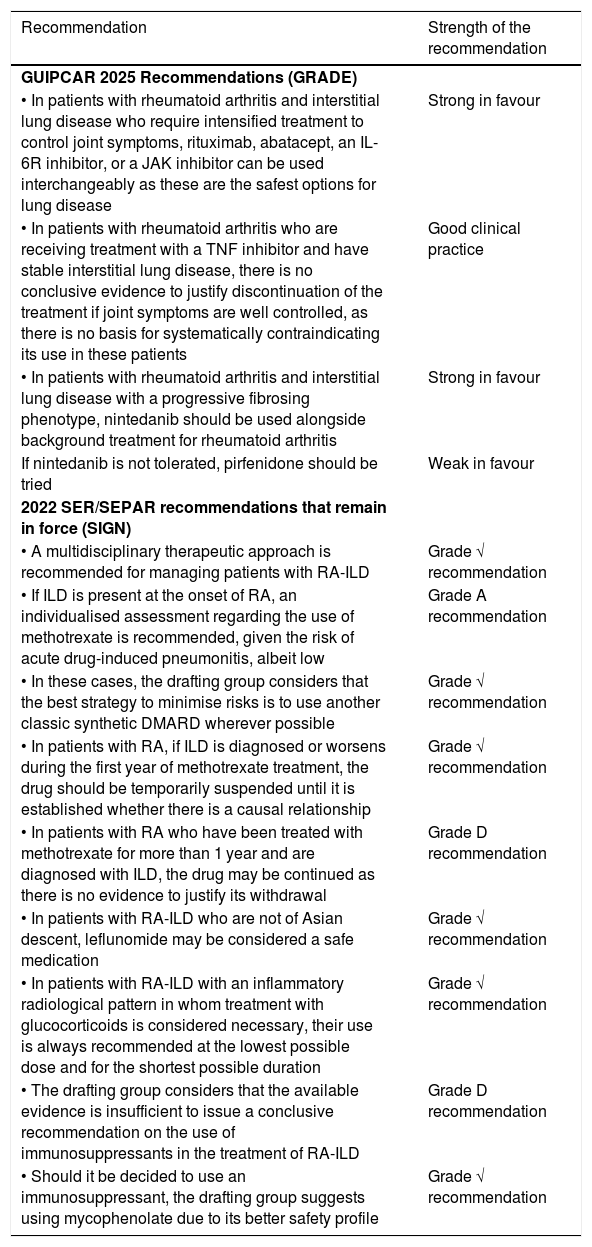
Table 1 shows the final recommendations for the treatment of RA-ILD that will appear in the new update of the GUIPCAR, and the SER/SEPAR 2022 recommendations which, the drafting group consider to still be valid following the updated review of the literature.
Recommendations for the management of interstitial lung disease associated with rheumatoid arthritis included in the updated Clinical Practice Guidelines for the Management of Patients with Rheumatoid Arthritis (GUIPCAR) and the 2022 SER/SEPAR Recommendations, which are still considered valid following the latest review of the literature.
| Recommendation | Strength of the recommendation |
|---|---|
| GUIPCAR 2025 Recommendations (GRADE) | |
| • In patients with rheumatoid arthritis and interstitial lung disease who require intensified treatment to control joint symptoms, rituximab, abatacept, an IL-6R inhibitor, or a JAK inhibitor can be used interchangeably as these are the safest options for lung disease | Strong in favour |
| • In patients with rheumatoid arthritis who are receiving treatment with a TNF inhibitor and have stable interstitial lung disease, there is no conclusive evidence to justify discontinuation of the treatment if joint symptoms are well controlled, as there is no basis for systematically contraindicating its use in these patients | Good clinical practice |
| • In patients with rheumatoid arthritis and interstitial lung disease with a progressive fibrosing phenotype, nintedanib should be used alongside background treatment for rheumatoid arthritis | Strong in favour |
| If nintedanib is not tolerated, pirfenidone should be tried | Weak in favour |
| 2022 SER/SEPAR recommendations that remain in force (SIGN) | |
| • A multidisciplinary therapeutic approach is recommended for managing patients with RA-ILD | Grade √ recommendation |
| • If ILD is present at the onset of RA, an individualised assessment regarding the use of methotrexate is recommended, given the risk of acute drug-induced pneumonitis, albeit low | Grade A recommendation |
| • In these cases, the drafting group considers that the best strategy to minimise risks is to use another classic synthetic DMARD wherever possible | Grade √ recommendation |
| • In patients with RA, if ILD is diagnosed or worsens during the first year of methotrexate treatment, the drug should be temporarily suspended until it is established whether there is a causal relationship | Grade √ recommendation |
| • In patients with RA who have been treated with methotrexate for more than 1 year and are diagnosed with ILD, the drug may be continued as there is no evidence to justify its withdrawal | Grade D recommendation |
| • In patients with RA-ILD who are not of Asian descent, leflunomide may be considered a safe medication | Grade √ recommendation |
| • In patients with RA-ILD with an inflammatory radiological pattern in whom treatment with glucocorticoids is considered necessary, their use is always recommended at the lowest possible dose and for the shortest possible duration | Grade √ recommendation |
| • The drafting group considers that the available evidence is insufficient to issue a conclusive recommendation on the use of immunosuppressants in the treatment of RA-ILD | Grade D recommendation |
| • Should it be decided to use an immunosuppressant, the drafting group suggests using mycophenolate due to its better safety profile | Grade √ recommendation |
√: recommended practice based on clinical experience and the consensus of the drafting team; DMARDs: disease-modifying antirheumatic drugs; GRADE: Grading of Recommendations Assessment, Development, and Evaluation; IL-6R: interleukin-6 receptor; JAK: Janus kinases; RA-ILD: rheumatoid arthritis-associated interstitial lung disease; SIGN: Scottish Intercollegiate Guidelines Network criteria; TNF: tumour necrosis factor.
The recommendations should under no circumstances be understood as restrictive rules of use, but rather as an aid to decision-making. We recognise that the guidelines are intended to provide guidance and that many of the recommendations in the document are based on the drafting group’s consensus and studies with a low level of evidence.
Authors’ contributionsAll authors have made substantial contributions to 1) the conception and design of the study and the analysis of the data; 2) drafting the article or critically reviewing its intellectual content, and 3) approving the final version submitted.
Ethical responsibilitiesProtection of humans and animals. The authors declare that no experiments on humans or animals have been conducted for this research.
Data confidentiality. The authors declare that they have followed their centre's protocols on the publication of patient data.
Right to privacy and informed consent. The authors declare that no patient data appear in this article.
FundingThe project was funded by the Spanish Society of Rheumatology (SER).
Javier Narváez has received funding from AbbVie, AstraZeneca, Lilly, Pfizer and UCB for courses and conference attendance; speaking fees from AbbVie, AstraZeneca, Boehringer, Bristol, Galápagos, Gebro Pharma, GSK, Sanofi, Lilly, Pfizer, and Fresenius; research participation funding from AstraZeneca, Boehringer and Novartis; and financial support from AbbVie, AstraZeneca, Boehringer, Galápagos, GSK, Lilly, Sanofi, and Fresenius for consultancy work for pharmaceutical companies or other technology firms.
Petra Díaz del Campo Fontecha has no conflicts of interest to declare.
M. Asunción Nieto Barbero has received funding from Boehringer Ingelheim for courses/conference attendance; fees from BMS, Ferrer, Janssen, and Roche for speaking engagements; funding from Boehringer Ingelheim for educational programmes or courses; financial support from Boehringer Ingelheim and Roche for consultancy work for a pharmaceutical company or other technologies; and funding from AstraZeneca and Boehringer Ingelheim for educational programmes or courses for the unit.
Virginia Villaverde has no conflicts of interest to declare.
Gloria Candelas has no conflicts of interest to declare.
Alejandro Balsa has received funding from AbbVie, Lilly, Pfizer and Sandoz for courses/conference attendance; fees from AbbVie, Biogen, BMS, Galapagos, Lilly, Nordic, Pfizer, Sandoz, Sanofi, and UCB for speaking engagements; funding from Pfizer and UCB for delivering educational programmes or courses; has received financial support from AbbVie, Novartis, and UCB for participating in research, and fees from AbbVie, Biogen, Galapagos, Lilly, Nordic, Pfizer, Sanofi, Sandoz, and UCB for consultancy work for a pharmaceutical company/other technologies. He has also received financial support from UCB for research funding and from Novartis, Sandoz, and UCB for educational programmes or courses for the unit.