



Juvenile-onset systemic lupus erythematosus (jSLE) is an autoimmune disease that presents with greater severity and higher mobility than adult-onset SLE. In Latin America, data on its incidence, prevalence and clinical phenotypes are limited. Specialized care is available only in a few centers with trained pediatric rheumatologists leading to substantial diagnostic delays and barriers to timely treatment. This review highlights the urgent need for region-specific strategies to improve early diagnosis, expand access to specialized care and reduce disparities in outcomes for children and adolescents with jSLE in Latin America.
El lupus eritematoso sistémico de inicio juvenil (jLES) es una enfermedad autoinmune que se presenta con gran severidad y alta mortalidad en comparación con el lupus eritematoso sistémico del adulto. En América Latina, los datos sobre la incidencia, la prevalencia y los diferentes fenotipos son limitados. La atención especializada está únicamente disponible en pocos centros que cuentan con reumatólogos pediatras capacitados para atender la complejidad de esta enfermedad, esto conlleva a un retraso importante, tanto en el diagnóstico, como en el inicio del tratamiento oportuno. Esta revisión destaca la necesidad urgente de implementar estrategias específicas para la región que ayuden a mejorar el diagnóstico temprano, amplíen el acceso a la atención especializada y reduzcan las disparidades en los desenlaces de los niños y los adolescentes con jLES en América Latina.
Systemic lupus erythematosus (SLE), characterized by autoantibodies, is the prototype of chronic autoimmune diseases. It is a serological, clinical, heterogeneous, multifactorial condition with diverse manifestations that can affect one or more organs, with significant morbidity and mortality.1 Its pathophysiology includes a genetic predisposition and environmental factors that impair the innate immune system.
Juvenile-onset systemic lupus erythematosus (jSLE) is less common than adult-onset SLE but tends to be more severe and associated with higher organ damage scores and higher mortality.2 jSLE is more frequent in females, with a female-to-male ratio of approximately 4–5:1. The average age at diagnosis is 11.9 years.3
Few information exists regarding jSLE incidence, prevalence, and clinical presentations across Latin America (LA), nor about the diagnostic delay, barriers, and possible strategies to improve patients’ outcomes in this region. This review aims to highlight the challenges that patients with jSLE and their families faced during their care and to make a call for action to address those problems.
jSLE in Latin America (LA)The LA and Caribbean Demographic Centre (CELADE), the Population Division of the Economic Commission for Latin América and the Caribbean, estimates a population of 660 million people in the 38 countries and territories of LA and the Caribbean.1 The population under 19 based on CELADE data is 0–4 years, 9.5 million; 5–9 years, 9 million; 10–14 years, 6.5 million; and 15–19 years, 4.5 million – totaling approximately 29.5 million children across the 38 LA countries.1,3
There is a lack of comprehensive data about the incidence and prevalence of jSLE in most LA countries. Incidence rates reported to be 0.3–0.9 per 100,000 children-years and prevalence 3.3–8.8 per 100,000 children.4Fig. 1 illustrates the variations in incidence that are influenced by differences in health care systems and the barriers to accessing specialists due to lack of pediatric rheumatologists.4,5
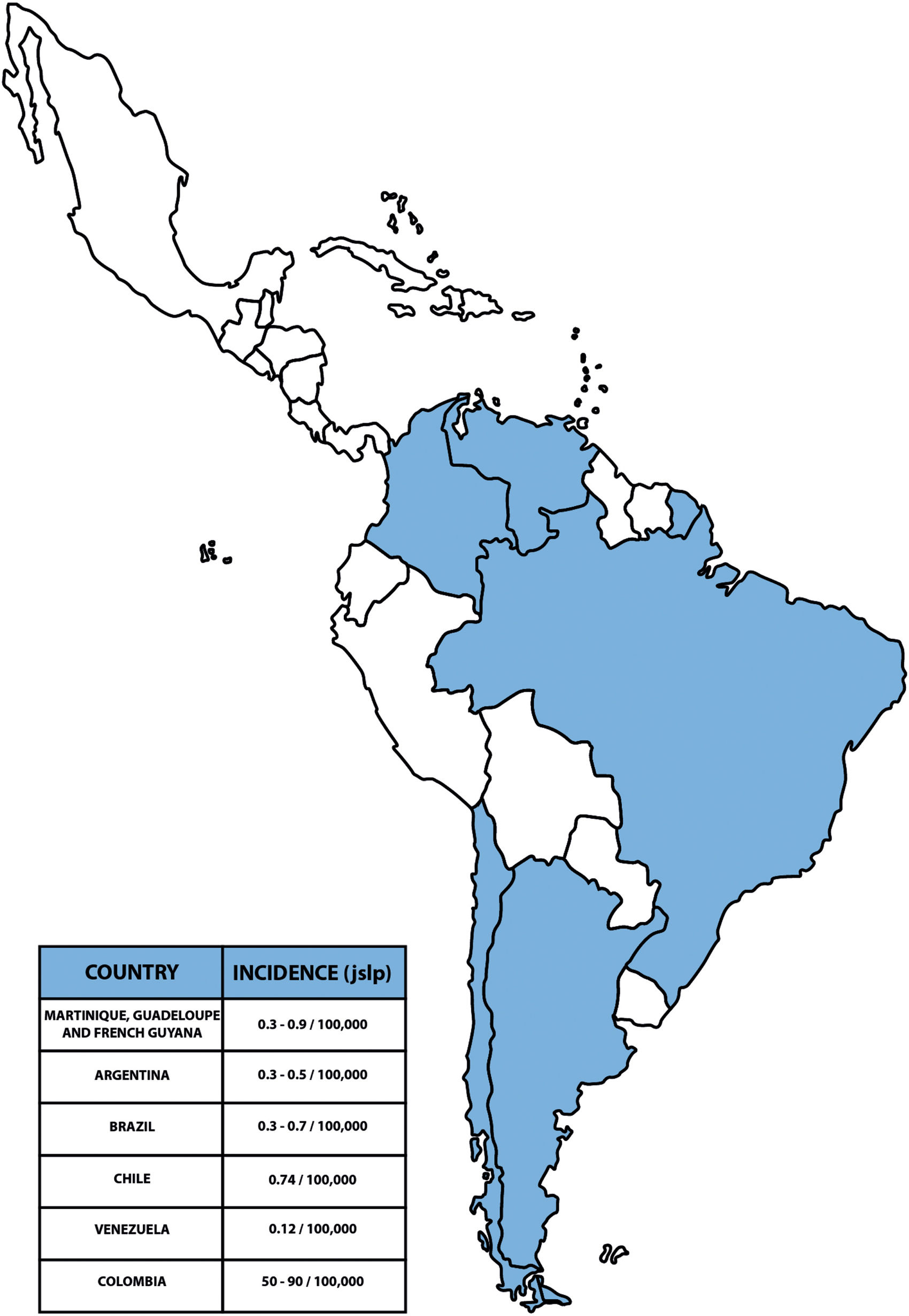
Incidence of jSLE in Latin America. This figure illustrates the differences in the incidence on jSLE, with the countries that have reported in highlighted, underscoring the lack of information from the remaining nations, Mexico, Argentina, and Brazil have regarding barriers and challenges in accessing specialist care. Patients, families, and caregivers often face a long and difficult journey to obtain a timely diagnosis and treatment referred to as a “medical patient's pilgrimage”, as shown in Fig. 2.

Patients and caregivers “medical pilgrimage” to access specialized care at tertiary centers with pediatric rheumatologists.6 In most low-income and middle-income countries, patients must first attend a primary care clinic staffed by general practitioners. They are then referred to a secondary-level facility where general pediatricians provide care. Following evaluation, patients may be referred to a tertiary center with access to pediatric subspecialists, such as pediatric rheumatologists.
A study conducted in 2018 by the Pan-American League of Associations for Rheumatology (PANLAR) in LA children with SLE, involving. Lupus nephritis (LN) was identified as the most frequent manifestation (86%), followed subcutaneous (84%), fever (71%), serositis (49%), and neuropsychiatric symptoms (32%). This study identified poor therapy adherence, early pregnancy, and substance abuse as major challenges.6
BrazilAccording to Gomez et al., Brazilian children with jSLE have an average time to diagnosis of 2.3 months. The most common initial manifestations were fever, asthenia, and hyporexia in 78.8% of 847 patients; 71% were Caucasian, and 34% were Afro-Latin Americans. The most common clinical manifestations were mucocutaneous and neuropsychiatric.7
A cross-sectional survey sent to 288 Latin American Pediatric Rheumatology (LAPR) from 21 countries, 161 from LAPR from 16 countries responded the survey pediatric conducted by Grupo Latino Americano de Estudio del Lupus (Latin American Group for the Study of Lupus) (GLADEL) and the Brazilian Childhood-onset SLE Registry Group (BRAC-SLE), highlighted the significant impact of ethnicity on jSLE in LA population. The most frequent manifestation was LN in 86%, representing a major cause of morbidity and mortality. It was often preceded by the onset of cutaneous manifestations in 84% of patients; neuropsychiatric involvement occurred in 32% of cases.6,8 Additionally, a study conducted by BRAC-SLE focusing on South America reported findings from an observational cohort of 1528 patients from 27 university centers in Brazil and reported that children under 6 years exhibited greater disease activity, with increased neuropsychiatric and LN manifestations, than cohorts from high-income countries.1,9 Although the data represented only partial sample of the LA population, these patients reported a first- or second-degree relative with SLE, suggesting a potential enrichment of genetic susceptibility factors in this population.1,10
ParaguayA retrospective, observational and descriptive study from Paraguay by Gianny et al. since 2019–2020 which included 52 patients, 78.8% female and 85.5% studied demographics, time of evolution until diagnosis reported an median 2.3 (ICR 0.25–15 months), 85% with more than 12 years and only 1 patient under 5 years. The most common symptoms were fever, asthenia, and anorexia, the most frequent antibodies at the time of diagnosis were antinuclear antibodies (92.3%), anti-DNA (86.5%), anti-RNP (13.5%), anti-Smith (3.8%) and same percentage for anti-La. Ferreira et al., in 2018 published the epidemiology and management practices for childhood-onset systemic lupus erythematosus patients in Latin America as a survey to assess epidemiology and practices in LA, including 21 countries regarding the country of Paraguay comparing with Mexico, Brazil and Argentina shows the same access to diagnosis as “excellent”, they hypothesized that probably the survey was answered by high rate of specialist practice in university hospital.5,6
ArgentinaIn a study of 254 patients with juvenile SLE, 100 patients (39%) had a family history of autoimmunity, and 30 children (12%) had familial lupus. Furthermore, this study compared patient's clinical phenotypes, categorizing them into two groups based on the age of onset of SLE: below or above 10 years of age. In the 28% of the cohort (70 patients) who presented SLE before 10 years of age, a more abrupt onset of the disease was observed with less diagnostic delay (median: 2 months; IQR: 1–4.3; p=0.003) presenting a more severe clinical phenotype of the disease, with greater hematological involvement at onset (90% vs 74%, p=0.003), more complications such as infections (57% vs 43%, p=0.03) and development of macrophage activation syndrome (MAS) (13% vs 4%, p=0.012), accumulating greater organ damage (47% vs 34%, p=0.032) compared to the juvenile-onset group. Children with early onset SLE, who have a severe course of disease and familial genetic background, and they hypothesized that these children should have their genetic profile and cytokine expression studied to understand their implications in the development of the clinical phenotype. This will allow them to identify subgroups of patients who benefit from personalized treatment.11
MexicoA descriptive study conducted in Puebla, Mexico by Morales Montes et al. analyzed a cohort of 89 jSLE patients that included males diagnosed in 2000–2020 and females in 2010–2020. The objective was to compare clinical manifestations by sex using the American College of Rheumatology (ACR) or Systemic Lupus International Collaborating Clinics (SLICC) classification criteria. In this study were included 89 patients, 66 females; the mean of age at diagnosis was 12.26±2.1 for males and 12.73±2.9 for females, there was no difference in vascular or mucocutaneous manifestations in females, but males had more hair loss (p=0.020) and had higher rates of serositis (47.8%) (p=0.009), and lupus nephritis was assessed by comparing the presence of glomerular syndromes, urinalysis changes and renal function characterized by greater proteinuria and lower glomerular filtration rates. When the comparison of the renal replacement therapy between females and males was done, they did not find any statistical difference, but it was more frequent in males. These findings are consistent with data from the Brazilian cohort, which also describes a more severe disease phenotype.12 Few studies have been conducted on Mexican populations. One study investigating the association of PDCD1 found a higher frequency of the PD1.3A allele in the jSLE group, differing from the polymorphisms reported in Swedish and Spanish populations. Another gene alteration was the relationship between TLR7 and increased copy numbers in female patients.13
Additional factors of poor prognosis reported include a study involving 159 patients by Blancas-Galicia et al., included 83.6% were females, with a mean age at diagnosis of 12.7 years. The average interval between symptom onset and diagnosis was 8.4 months. A mortality rate associated with lupus nephritis of 20.1% was observed during follow-up; they conclude that survival of jSLE was lower compared with wealthier countries, and infections and disease activity were the most common causes of death.14
ColombiaIn 2018, a study in Bogota involving 110 participants, 55 with jSLE and 55 controls, evaluated the sensitivity and specificity of the SLICC classification criteria compared to the 1997 ACR criteria. The mean age was 12.8 years among the jSLE cases, and the female-to-male ratio was 5.4:1. The SLICC criteria had a higher sensitivity (98%) and slightly lower specificity (87%) compared to the ACR criteria, which had a sensitivity of 78.1% and a specificity of 96%.15 Regarding factors of poor prognosis, a study conducted in Medellin identified infections, particularly those associated with immunosuppressive therapy, as significant contributors to adverse outcomes.16
French GuyanaA cohort study of 54 jSLE patients conducted in the French West Indies reported a higher incidence and prevalence of the disease among Afro-Caribbean children compared to the white French population. Notably, 30% of the patients had a family history of SLE, prompting the authors to suggest genetic and environmental factors. An increasing trend of jSLE and other autoimmune diseases has been observed in recent years. The median time from symptom onset was approximately three months. Malar rash was the most common manifestation, occurring in 100%, followed by arthritis (93%) and fever (89%); LN was reported in 33%. Infections were identified as the leading cause of death in this cohort.17
ChileIn Chile, a study of 31 jSLE patients reported synovitis as the most frequent manifestation, occurring in 87%. Lupus nephritis was the second most frequent (58%). Neuropsychiatric involvement was reported in 3% of the patients. Infectious diseases were the more prevalent comorbidities in this cohort.18
There are other differences in information regarding clinical characteristics from Venezuela, Ecuador19 and Bolivia, but these are case reports with a small number of patients.
Barriers and adverse factors related to jSLE in Latin AmericaThere are differences in clinical characteristics at the onset and during the disease course. We identified early onset age, lupus nephritis, infections, genetic predisposition, and environmental exposures as adverse prognostic factors, demonstrating its heterogeneity and reinforcing the theory of multifactorial pathogenesis.
MalnutritionAccording to the World Health Organization, malnutrition includes undernutrition (wasting, stunting, and underweight), vitamin or mineral imbalances, overweight, obesity, and diet-related non-communicable disease.20,21 Malnutrition is well-recognized in children and adolescents with jSLE. Chronic inflammation is caused by elevated proinflammatory cytokines and oxidative stress, which cause hyporexia, renal involvement, and decreased nutrient absorption. In addition, glucocorticoid use may lead to dyslipidemia, vitamin D deficiency, and other nutritional imbalances. Socioeconomic constraints and multifaceted emotional, social, and psychological factors of adolescence can exacerbate the risk of malnutrition and contribute to an increased catabolic state and oxidative stress. A Brazilian study of jSLE and juvenile idiopathic arthritis patients found that 4.5% were under their ideal weight for their age and 18.2% were obese. Dyslipidemia associated with prolonged corticoid use was found in 30–40%.22
Geographical region, income, and healthcare systemsThere is a paucity of comprehensive data regarding the different clinical characteristics, challenges, barriers, and adverse prognostic factors affecting jSLE patients in LA. Although regions such as the Andean and Caribbean, the Southern Cone, and Central America have generated more reports, there is not enough to characterize disease trajectory or delineate the specific obstacles these patients face in accessing specialized tertiary care by a pediatric rheumatologist.
In contrast, other high-income countries and continents, such as Australia and North America, have generated more comprehensive reports regarding SLE in the indigenous population. In one descriptive study, jSLE was found 2.5–6 times more frequent among the indigenous population with an LN rate of 47% compared to 8% in non-indigenous individuals, with more organ damage and 40% mortality; however, there is a lack of studies that identify the barriers to optimal care including geographic remoteness, linguistic and cultural disparities, and widespread distrust in their health care system.23
jSLE is a complex, heterogeneous, potentially life-threatening disease; however, literature regarding the geographical challenges faced by patients and their caregivers remains limited. The wide variability of socioeconomic conditions across LA further exacerbates those challenges.
The burden of rheumatic diseases consistently exceeds the healthcare system's capacity worldwide, regardless of national income or geographic location.24 Geographic barriers are a stronger determinant of health disparities globally than differences in healthcare systems directly linked to disparities more than health care systems worldwide. This fact affects timely diagnosis, access to studies, and early treatment.
Pediatric rheumatologists in high- and medium-income countries often cluster in large academic cities. The standard of care is one pediatric rheumatologist for every 200,000–400,000 children.25 About 96% of the LA workforce operates only in six countries, leaving other countries without pediatric rheumatologists.24
The small number of experts across LA (Fig. 3) according to PANLAR, could be due to the lack of academic centers and the variability in those who certify as pediatric rheumatologists. Regarding pediatric rheumatology access, establishing and improving specialized training institutions in LA is essential to ensure the development of a qualified pediatric rheumatology workforce. The Rheumatology Society of Rheumatology reports only two people for all the country. In Mexico, the ratio of adult rheumatologists is 1 per 100,000 inhabitants. In 2020, there were 1002 certified adult rheumatologists. Among these, 94 were certified pediatric rheumatologists, but only 41 were members of the Mexican College of Rheumatology, with most based in Mexico City, where the rheumatologist-to-population ratio is 0.03 per 100,000.2
Compared to other chronic diseases, delays in jSLE appear to be more dependent on mistrust, unpreparedness, and inaccessibility. Health disparities between countries and “medical pilgrimage” represent a major gap in access.
A recently published an analysis of the opportunities and limitations of healthcare systems in Latin America, focusing on child mortality. Their findings indicate that despite economic growth and poverty reduction in the region during the 21st century, profound inequalities persist, particularly in countries such as Bolivia, Colombia, Nicaragua, and the Dominican Republic, where there are significant gaps in access to care. Private providers predominantly serve higher-income populations in many LA countries, while social security systems cover only formally employed workers. Nevertheless, vulnerable groups continue to face substantial barriers. This study emphasizes the need for heath policies and strengthening managerial capacity at the subnational level to improve health care outcomes across all countries. The differences in the healthcare systems are associated with high child mortality.26
A recent publication exploring the opportunities and challenges for lupus care in LA, Asia-Pacific, and the Middle East concluded that SLE is a low-priority condition in LA. The authors conducted a comprehensive literature review and detailed the region's heterogeneity, sociocultural, biological, genetic factors, and barriers such as access and the cost of treatment. A survey of 5759 rheumatologists by the World Lupus Federation regarding opportunities, emphasized the importance of general medical education to recognize, diagnose, and manage SLE and identify patients who require hospitalization. Another barrier in LA is inadequate access to new treatments due to their cost and variability in approval processes, especially for jSLE.27
Initiatives, enhancement, and implementation strategiesAccording to available data from the literature, improving the care of juvenile systemic lupus erythematosus (jSLE) in Latin America requires urgent, coordinated action. Several initiatives have been launched to raise awareness and strengthen clinical capacity among general practitioners and pediatricians. Notably, educational tools such as Pediatric Musculoskeletal Matters, which includes the pGALS screening method, have been developed to support the early identification of musculoskeletal symptoms in children.28
In parallel, the Padiatric Rheumatology European Society (PReS), in collaboration with the Paediatric Rheumatology International Trials Organisation (PRINTO), has contributed to global outreach by developing multilingual educational materials. These resources, adapted for 76 countries and translated into 76 languages, aim to improve understanding of pediatric rheumatic diseases among patients, families, and health professionals.29
Efforts to expand access to specialized care have included the creation of pediatric rheumatology referral centers in major urban areas and the integration of telemedicine to reach underserved rural populations. Case-finding efforts should be adapted to the linguistic and cultural context of each rural area to ensure equitable access to diagnosis and care.
A comprehensive literature review was conducted using scientific databases as PubMed, Google Search and grey literature sources, including search engines (Google, Yahoo), online blogs, magazines, and non-indexed materials. Strikingly, no publications were identified that specifically address the lived experiences of patients and caregivers navigating access to care for jSLE in Latin America.
ConclusionsJuvenile-onset systemic lupus erythematosus in Latin America represents a serious public health challenge, defined by profound inequity in access to care.
The poor prognosis for patients is due to a convergence of socioeconomic barriers – such as poverty and geographic remoteness – and critical failures within the healthcare system. The most significant of these failures is the severe scarcity and centralization of pediatric rheumatologists, which forces families into a prolonged and exhausting “medical pilgrimage”.
This scenario leads to delayed diagnoses, greater disease severity at onset, and a high frequency of poor prognostic factors, particularly lupus nephritis.
To change this landscape, it is essential to implement coordinated and integrated strategies. These must enhance training for both primary care providers and specialists, alongside the enforcement of public policies that ensure timely and equitable access to diagnosis and effective treatment.
Further research is needed to develop interventions that reduce diagnostic and therapeutic delays, and to improve health outcomes across all levels of care, particularly in underserved regions.
Declaration of generative AI and AI-assisted technologies in the writing processDuring the preparation of this work, the authors used ChatGPT4 to [improve the writing style]. After using this tool/service, the authors reviewed and edited the content as needed, assuming full responsibility for the content of the publication.
Conflict of interestThe authors declare that they have no conflict of interest.