

Sugerencias
Idioma
Guía para autores
Buscador
Información de la revista
Vol. 22. Núm. 1.
(Enero 2026)
Cita
Cita
Compartir
Descargar PDF
Más opciones de artículo
Visitas
899
Vol. 22. Núm. 1.
(Enero 2026)
Original Article
Acceso a texto completo

Principal component and cluster analysis of functional parameters in rheumatic patients: Identifying the most efficient assessment tool

Análisis de componentes principales y análisis de clúster de parámetros funcionales en pacientes reumáticos: identificación de la herramienta de evaluación más eficiente
Visitas
899
David Vega-Moralesa,
Autor para correspondencia
drdavidvega@yahoo.com.mx

Corresponding author.
, Jorge Medina-Castillob, Pablo Herrera-Sandateb, Ana K. Vazquez-Bañuelosc, Rodrigo J. Castillo-de la Garzab, Luis A. Chavez-Alvarezb, Lourdes Gil-Floresa, Julio A. Lagarda-Ramosd
a Rheumatology Service and Infusion Center, Mexican Institute of Social Security (IMSS), Hospital General de Zona No. 17, Monterrey, Nuevo León, Mexico
b Rheumatology Service at Hospital Universitario “Dr. Jose Eleuterio Gonzalez”, Universidad Autónoma de Nuevo León, Monterrey, Nuevo León, Mexico
c Sports Medicine Department at Hospital Universitario “Dr. Jose Eleuterio Gonzalez”, Universidad Autónoma de Nuevo León, Monterrey, Nuevo León, Mexico
d Instituto Tecnológico y de Estudios Superiores de Monterrey (ITESM), Monterrey, Nuevo León, Mexico
Este artículo ha recibido
Información del artículo
Resumen
Texto completo
Bibliografía
Descargar PDF
Estadísticas
Figuras (2)
fig0005
fig0010
Tablas (2)
Table 1. Distribution of diagnoses in the study population.
Tablas
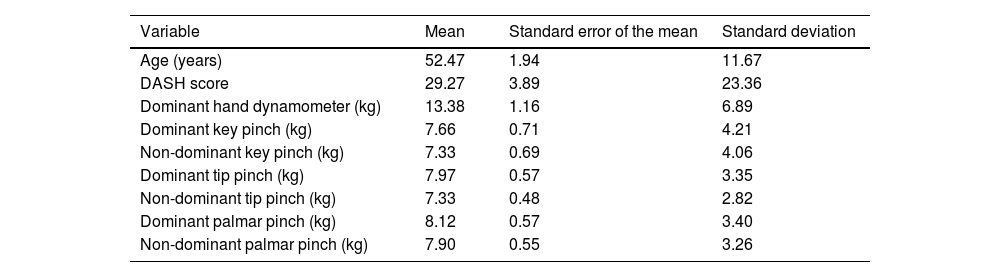
Table 2. Descriptive statistics of the study sample: means, standard errors, and standard deviations for demographic and functional variables.
Tablas
Abstract
Background

Rheumatic diseases significantly impact hand function, leading to disability and reduced quality of life. Various tools assess upper limb function, including the DASH questionnaire, grip strength measurement, and range of motion (ROM) evaluation. However, the most efficient parameters for assessing functional impairment remain unclear.

Objective

To determine the most relevant anthropometric and functional measurements for evaluating hand function impairment in patients with rheumatic diseases, using principal component analysis (PCA) and cluster analysis.

Methods

We conducted a cross-sectional study in 36 patients with inflammatory arthritis, primarily rheumatoid arthritis (RA). Hand function was assessed using the DASH questionnaire, grip and pinch strength tests (Jamar dynamometer and Mathiowetz protocol), and ROM measurements. PCA was applied to identify the most relevant functional variables, and K-means clustering was used to classify patients into functional subgroups.

Results

Grip and pinch strength were the dominant factors, explaining 33.5% of total variance, while ROM contributed less to functional impairment assessment. Cluster analysis identified four functional subgroups, differentiating patients based on grip strength and disability levels (DASH score). Patients with higher grip strength exhibited lower disability, while those with severe disability had significantly weaker grip strength, reinforcing its importance as a functional marker.

Conclusion

Grip strength is a key indicator of upper limb function impairment in RA and other rheumatic diseases. Given its strong association with disability and its dominance in variance explanation, grip strength measurement alone may serve as a time-efficient and reliable assessment tool, especially in resource-limited settings. Further research should validate grip strength as a primary clinical indicator and optimize assessment protocols for rheumatic patients.

Keywords:
Functional assessment
Grip strength
Principal component analysis
Cluster analysis
Rheumatic diseases
Resumen
Antecedentes

Las enfermedades reumáticas afectan significativamente la función de las manos, disminuyendo la calidad de vida. Existen herramientas para evaluar la función del miembro superior, como el cuestionario DASH, la medición de fuerza de prensión y la evaluación del rango de movimiento (ROM). Sin embargo, no está claro cuáles son los parámetros más eficaces para evaluar la discapacidad funcional.

Objetivo

Determinar las mediciones antropométricas y funcionales más relevantes para evaluar la discapacidad de la función de la mano en pacientes con enfermedades reumáticas utilizando el análisis de componentes principales (PCA) y el análisis de clúster.

Métodos

Se realizó un estudio transversal con 36 pacientes con artritis inflamatoria, principalmente artritis reumatoide (AR). Se evaluó la función de la mano mediante el cuestionario DASH, pruebas de fuerza de prensión y pellizco (dinamómetro Jamar y protocolo Mathiowetz), y mediciones de ROM. Se aplicó PCA para identificar las variables más relevantes y el análisis de K-means para clasificar a los pacientes en subgrupos funcionales.

Resultados

La fuerza de prensión y pellizco fueron los factores dominantes, explicando el 33.5% de la varianza total, mientras que el ROM contribuyó menos a la evaluación de la discapacidad funcional. El análisis de clúster identificó cuatro subgrupos funcionales, diferenciando a los pacientes según la fuerza de prensión y el puntaje DASH. Los pacientes con mayor fuerza de prensión presentaron menor discapacidad.

Conclusión

La fuerza de prensión es un indicador clave de la discapacidad de la función del miembro superior en la AR y otras enfermedades reumáticas. Dado su fuerte correlato con la discapacidad, podría ser una herramienta eficiente y confiable para la evaluación, especialmente en entornos con recursos limitados.


Palabras clave:
Evaluación funcional
Fuerza de agarre
Análisis de componentes principales
Análisis de clúster
Enfermedades reumáticas
Texto completo
Introduction

Rheumatic diseases have a significant prevalence in the general population, affecting between 9.8% and 33.2%.1 These conditions impose a considerable burden on healthcare systems, accounting for 15–45% of primary care consultations, primarily due to musculoskeletal disorders.2 Several validated tools have been identified to assess upper limb function in patients with rheumatic diseases.

DASH questionnaire (disabilities of the arm, shoulder, and hand)

Widely used to assess upper limb disability, particularly in rheumatoid arthritis.3 The DASH questionnaire claims to measure multiple domains, including pain, physical function, emotional well-being, and social participation, but the dimensionality has been adequately studied in only a few instruments, also is often a lack of information on how to interpret the scores from the DASH, which can make it challenging for clinicians to apply the results effectively in practice.4

Grip strength measurement

Strongly correlates with upper limb functional capacity, making it an efficient indicator.5 However, the Mathiowetz protocol for grip strength assessment faces challenges in adoption and consistency, particularly about cut-off values and their application in different populations and diseases. These limitations highlight the need for further evaluation and adaptation to improve its utility in both clinical and research settings.6

Jamar dynamometer

Widely regarded as the gold standard for measuring grip strength, but it does have some disadvantages, including overestimation of strength, sensitivity to hand anatomy, and variability in detecting low values. These factors should be considered when using the Jamar dynamometer, especially in clinical and research settings where precision and accuracy are critical.7–9

Range of motion (ROM) measurements

ROM of the upper limb is crucial in rehabilitation and clinical assessments. However, various methods have inherent disadvantages that can affect their accuracy and reliability. Manual measurement using tools such as goniometers requires the presence of both the patient and the physiotherapist, which can be inconvenient and limit accessibility.10 Additionally, manual methods often suffer from inter-examiner variability between different examiners, affecting the consistency of the measurements.11

Comprehensive physical assessments can be time-consuming, require specialized equipment, and be costly. Therefore, identifying the most efficient parameters for rapid and objective evaluation is crucial. This study aims to determine which anthropometric measurements are the most effective for assessing functional impairment in rheumatic patients.

MethodsStudy design and participants

We conducted an observational, cross-sectional study at the Rheumatology Clinic of Hospital Universitario “Dr. José Eleuterio González” in Monterrey, Mexico, between August and December 2020. The study included adult patients with inflammatory arthritis, primarily diagnosed with RA, attending follow-up consultations during the study period.

Upper limb assessment

The assessment of upper limb function included the following measures:

  • -

    DASH questionnaire (0–100 scale, higher=worse function).

  • -

    Range of motion measurements (flexion, extension, abduction, adduction, radial/ulnar deviation).

  • -

    Grip and pinch strength evaluated using a B&L Engineering® PG-30 pinch gauge, measuring tip, key, and three-point pinch strength following the Mathiowetz protocol.12

  • -

    Handgrip strength was measured using a Jamar® hydraulic dynamometer (Sammons Preston, Bolingbrook, IL, USA), a validated tool for assessing maximal voluntary grip force.13

Statistical analysisDescriptive statistics

Descriptive statistics were used to summarize the demographic and clinical characteristics of the study population. Categorical variables (e.g., sex, diagnosis) were reported as absolute frequencies and percentages, with 95% confidence intervals (CIs). Continuous variables (e.g., age, DASH score, grip strength) were expressed as means and standard deviations (SDs) after assessing normality using the Shapiro–Wilk test.

Principal component analysis (PCA)

PCA was performed to reduce data complexity while retaining the maximum variance. Sampling adequacy was assessed using the Kaiser–Meyer–Olkin (KMO) test. Values above 0.8 indicate meritorious adequacy, 0.7–0.8 are considered middling, 0.6–0.7 mediocre, and 0.5–0.6 miserable, and below 0.5 unacceptable for PCA.14

Bartlett's test of sphericity was used to determine whether the variables were sufficiently correlated for PCA (p<0.05 indicated suitability).

PCA was conducted via eigenvalue decomposition of the correlation matrix. Components with eigenvalues >1.0 (Kaiser's criterion) were retained for further analysis. Varimax orthogonal rotation was applied to maximize variance distribution and improve component interpretability. Rotated factor loadings ≥0.4 were considered significant for component interpretation.

The total variance explained was used to determine the number of components required to capture the most variance in functional parameters. Factor loadings were analyzed to identify variable groupings within each component, and components were labeled based on the functional relevance of their highest-loading variables.

Factors with eigenvalues >1.0 (Kaiser's criterion) were retained, and Varimax rotation was applied to maximize variance captured per factor. Factor loadings ≥0.4 were considered significant for variable interpretation. Factor scores were computed using the regression method, assigning each patient a score based on their performance in each factor.

Clustering (exploratory analysis)

To illustrate potential subgroup variability, we conducted an exploratory K-means clustering based on PCA factor scores, which are suitable for continuous, standardized data, but given the small sample size, it was indented only to provide preliminary insight. Functional parameters included the DASH score (functional disability), grip strength and pinch strength (Mathiowetz protocol), and range of motion (ROM) in the wrist and fingers (flexion, extension, abduction, adduction, and radial/ulnar deviation).

The Elbow method was applied to the within-cluster sum of squares (WCSS) plot to determine the optimal number of clusters. A four-cluster solution was selected based on the inflection point of the scree plot. Patients were classified into four functional groups based on the Euclidean distance between their factor scores and cluster centroids.

The final cluster centers represented the average factor scores for each subgroup. Factor scores with positive or negative values indicated a stronger or weaker representation of that functional dimension within the cluster. ANOVA tests were conducted to assess significant differences between clusters (p<0.05).

Cluster quality was assessed by calculating the total WCSS and the average silhouette coefficient for the four-cluster solution.

All statistical analyses, including PCA, were performed using IBM SPSS Statistics v22 (Armonk, NY, USA: IBM Corp.).

Results

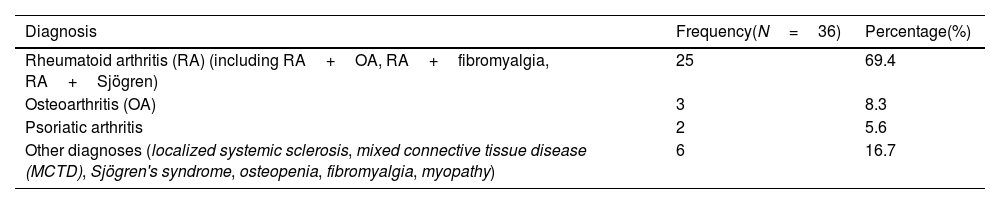
Among the 36 participants, 34 (94.4%) were women (95% CI: 86.9–100%), with a mean age of 52 years (SD=11.67). The most common diagnosis was rheumatoid arthritis (69.4.2%). Table 1 shows patient diagnoses and Table 2 describes assessed continuous variables.

Table 1.

Distribution of diagnoses in the study population.

Diagnosis  Frequency(N=36)  Percentage(%) 
Rheumatoid arthritis (RA) (including RA+OA, RA+fibromyalgia, RA+Sjögren)  25  69.4 
Osteoarthritis (OA)  8.3 
Psoriatic arthritis  5.6 
Other diagnoses (localized systemic sclerosis, mixed connective tissue disease (MCTD), Sjögren's syndrome, osteopenia, fibromyalgia, myopathy16.7 
Table 2.

Descriptive statistics of the study sample: means, standard errors, and standard deviations for demographic and functional variables.

Variable  Mean  Standard error of the mean  Standard deviation 
Age (years)  52.47  1.94  11.67 
DASH score  29.27  3.89  23.36 
Dominant hand dynamometer (kg)  13.38  1.16  6.89 
Dominant key pinch (kg)  7.66  0.71  4.21 
Non-dominant key pinch (kg)  7.33  0.69  4.06 
Dominant tip pinch (kg)  7.97  0.57  3.35 
Non-dominant tip pinch (kg)  7.33  0.48  2.82 
Dominant palmar pinch (kg)  8.12  0.57  3.40 
Non-dominant palmar pinch (kg)  7.90  0.55  3.26 
PCA findings

The KMO measure of sampling adequacy was 0.73, indicating middling adequacy. Bartlett's test of sphericity was significant (χ2=145.23, df=45, p<0.001).

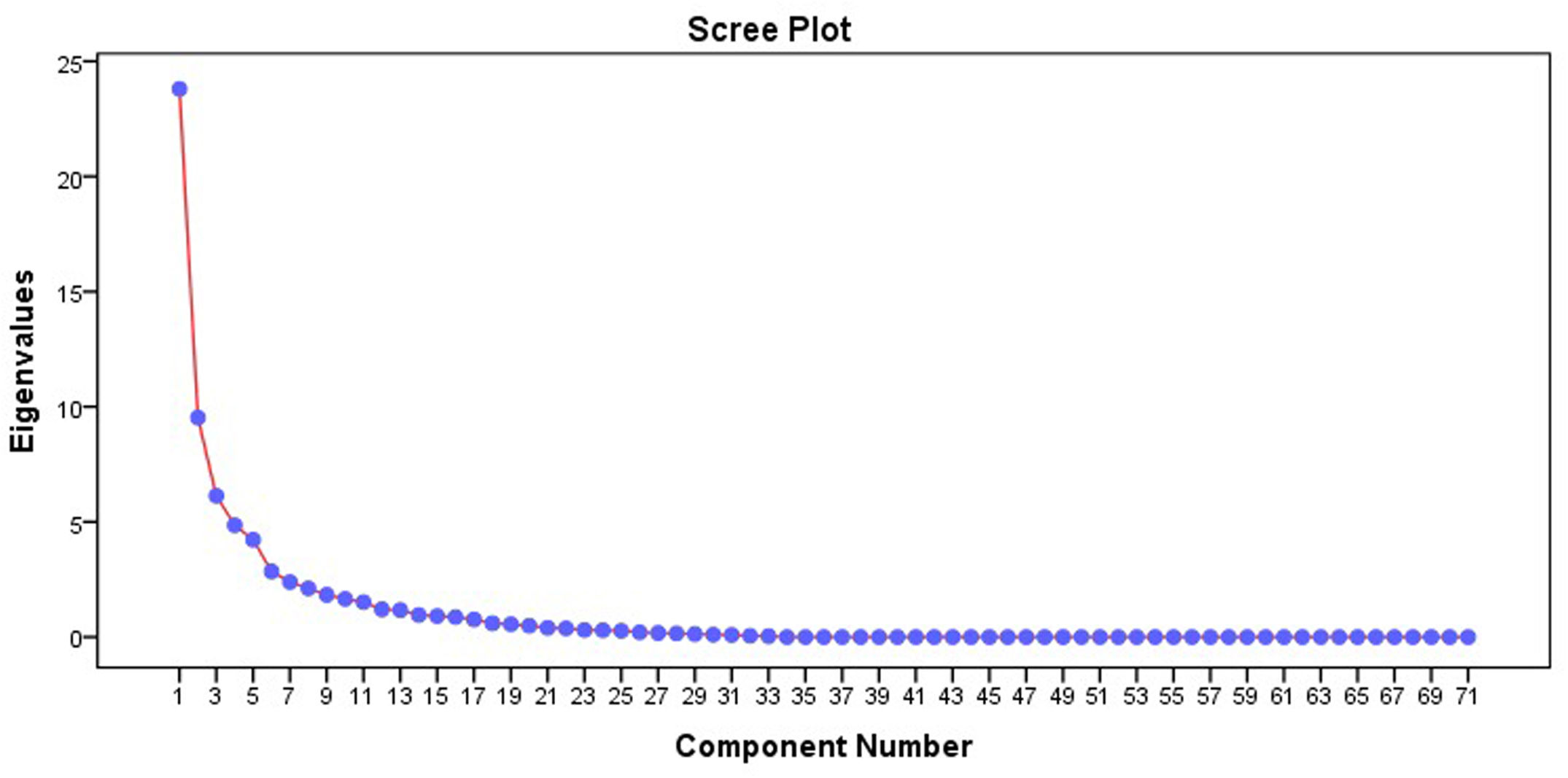
The first 13 principal components accounted for 89.1% of the total variance, capturing most of the variability in the dataset. The first component alone explained 33.5%, highlighting its dominant role in defining functional parameters. Together with the second, third, and fourth components, the explained variance increased to 62.4% (Fig. 1).

Fig. 1.

Scree plot displaying eigenvalues for principal components.

Component clustering and functional relevance:

  • -

    Component 1 (hand strength and pinch strength): included key pinch, grip strength, and tip pinch.

  • -

    Component 2 (tip pinch strength – dominant and non-dominant hand): explained 13.4% of the variance.

  • -

    Component 3 (metacarpophalangeal joint ROM): accounted for 8.7%.

  • -

    Subsequent components4–13 contributed smaller proportions of variance (≤6.9%), primarily from wrist movement, radial/ulnar deviation, and carpal range of motion.

Cluster analysis findings

The analysis resulted in four clusters, each representing different functional profiles:

  • -

    Cluster 1 (mild disability, high functionality): Lowest DASH score (11.77). Higher grip and pinch strength values compared to other clusters. ROM values within normal or near-normal range.

  • -

    Cluster 2 (severe disability, weakest hand strength): Highest DASH score (40.79). Lowest grip strength and pinch strength values. ROM restrictions, particularly in wrist flexion and extension.

  • -

    Cluster 3 (moderate disability with preserved strength): DASH score (41.16) similar to Cluster 2, but better grip and pinch strength. Less ROM limitation than Cluster 2.

  • -

    Cluster 4 (moderate disability, preserved ROM, reduced strength) DASH score (22.03) indicates moderate impairment. Better ROM than Clusters 2 and 3, but weaker grip strength compared to Cluster 1.

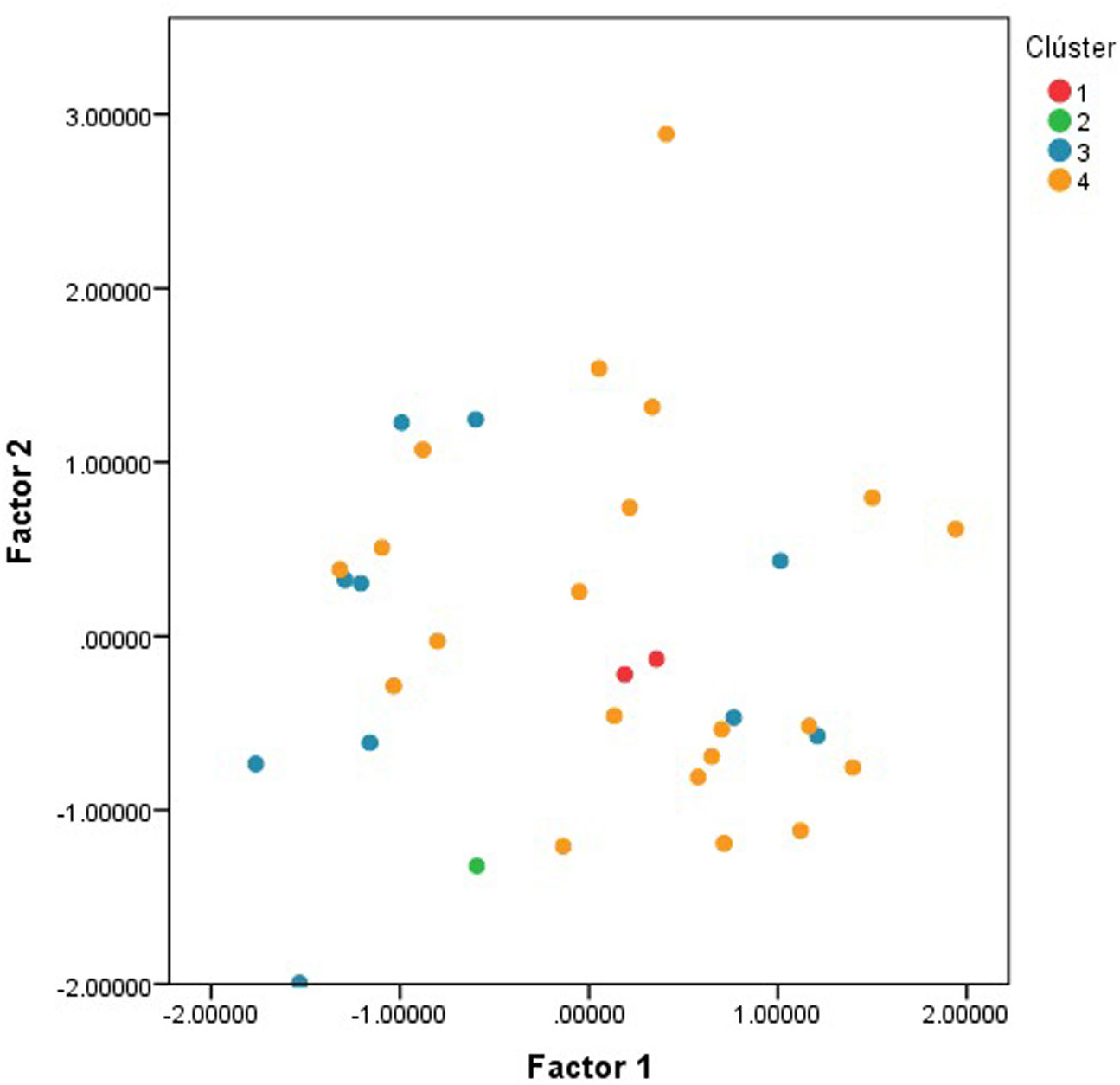
The distribution of patients in the PC1–PC2 space according to cluster membership is shown in Fig. 2.

Fig. 2.

Scatter plot showing patient distribution by cluster membership in the space defined by the first two principal components.

Discussion

In this cohort, all patients had inflammatory arthritis, in the upper limb (hands), the majority RA patients. In patients with RA and other rheumatic diseases, hand strength measurement is crucial for assessing functional disability and disease activity. However, reference values for these measurements vary depending on the study and the methodology used.

In our cohort, mean grip strength was 13.38, similar to reported in other studies evaluating RA patients.15 The results from our study align with existing evidence regarding hand function impairment in RA and other rheumatic diseases: the DASH score in our study had a mean of 29.27 (SD: 23.36), indicating a moderate level of disability, consistent with previous reports highlighting functional limitations in RA patients.16,17 Our data also showed variability in pinch strength, with key, tip, and palmar pinch measurements ranging between 7.33kg and 8.12kg, reflecting the impact of RA-related musculoskeletal impairment.

To our knowledge, this is the first report in using PCA and cluster analysis to evaluate hand function in rheumatic patients. The total variance explained results emphasize that grip strength and pinch strength dominate upper limb function assessment in our cohort. Hand strength as the dominant factor in upper limb function as reflected in the first component, explaining 33.5% of total variance, is composed of grip strength and pinch strength variables. This suggests a single-hand strength test could serve as a reliable indicator of upper limb functional status.18 The first three components explain 50% of total variance, demonstrating that a small number of variables can sufficiently assess functional impairment. ROM measurements contribute less to the total variance, indicating they may be less critical than strength parameters for functional assessment.

The exploratory cluster analysis suggested that grip strength and functional disability (DASH score) were the main discriminators among patient subgroups. Cluster 1 (mild disability) showed high grip and pinch strength, consistent with the association between stronger hand function and lower disability. Cluster 2 (severe disability) showed lower grip strength, supporting its potential role as a primary functional assessment tool. Cluster 3 (moderate disability) had strong grip strength despite a high DASH score, suggesting that functional compensation (e.g., using other muscle groups) may occur. Cluster 4 (moderate disability with preserved ROM) suggests that ROM limitations are not always the primary determinant of functional impairment.

In time-constrained clinical settings, selecting an assessment tool that combines multiple functional aspects is crucial. Given the strong dominance of hand strength in variance explanation, measuring grip or pinch strength alone may offer a time-efficient alternative to extensive ROM or multi-scale assessments. Using cluster-based functional profiles could help illustrate potential patient stratification, helping clinicians determine proper treatment plans. In resource-limited settings, grip strength measurement alone may serve as a rapid and effective tool to screen functional impairment.

Further validation of grip strength as a primary clinical indicator in rheumatic diseases. Comparative studies assessing grip strength versus DASH scores in different clinical populations. Development of an optimized assessment protocol focusing on key strength metrics identified in PCA component analysis. Longitudinal studies assess whether patients transition between clusters over time. Evaluation of interventions (e.g., hand therapy) to determine how they impact cluster assignment and functional outcomes.

Conclusion

Our study highlights hand strength as the primary determinant of upper limb function in rheumatoid arthritis and other rheumatic diseases. Grip and pinch strength explained 33.5% of total variance, making them key functional markers. Exploratory cluster analysis suggested that grip strength was a key discriminator between disability levels, while ROM measurements contributed less to functional assessment.

In clinical and resource-limited settings, grip strength measurement alone may serve as a rapid and reliable assessment tool. Future research should focus on validating grip strength as a primary clinical indicator and optimizing assessment protocols for functional impairment in RA patients.

CRediT authorship contribution statement

All authors contributed to the study's conception and design. Material preparation, formal analysis and investigation, data collection, writing and original draft preparation, review and editing were performed by M.D. Jorge Medina-Castillo and M.D. Ph.D. David Vega-Morales. All authors commented on previous versions of the manuscript. All authors read and approved the final manuscript. All the authors take full responsibility for the integrity and accuracy of all aspects of the work.

Compliance with ethical standards

Study was performed in accordance with the ethical standards as laid down in the 1964 Declaration of Helsinki and its later amendments. All patients gave their individual informed consent for processed data and publication before their inclusion in this study. The protocol was approved by the Research Ethics Committee of the “Dr. José Eleuterio González” University Hospital, Universidad Autónoma de Nuevo León (March 22, 2022/RE22-00003). Patients were aware of what kind of personal data was processed, how will it be used and for which purpose.

Funding

We declare no competing interests and funding that are directly or indirectly related to work submitted for publication. This study did not receive benefits from commercial sources.

Conflicts of interest

All the authors in this paper declare no conflict of interest.

Data availability

Data are available on reasonable request from the corresponding author.

References
[1]
F. Salaffi, M. Di Carlo, M. Carotti, S. Farah, A. Ciapetti, M. Gutierrez.
The impact of different rheumatic diseases on health-related quality of life: a comparison with a selected sample of healthy individuals using SF-36 questionnaire, EQ-5D and SF-6D utility values.
Acta Biomed, 89 (2018 Jan 17), pp. 541
[2]
L. March, E.U.R. Smith, D.G. Hoy, M.J. Cross, L. Sanchez-Riera, F. Blyth, et al.
Burden of disability due to musculoskeletal (MSK) disorders.
Best Pract Res Clin Rheumatol, 28 (2014), pp. 353-366
[3]
R. Arreguín Reyes, C.O. López López, E. Álvarez Hernández, G. Medrano Ramírez, M. De la Luz Montes Castillo, J. Vázquez-Mellado.
Evaluation of hand function in rheumatic disease. Validation and usefulness of the Spanish version AUSCAN, m-SACRAH, and Cochin Questionnaires.
Reumatol Clín, 8 (2012), pp. 250-254
[4]
S.D.M. Bot, C.B. Terwee, D.A.W.M. Van Der Windt, L.M. Bouter, J. Dekker, H.C.W. De Vet.
Clinimetric evaluation of shoulder disability questionnaires: a systematic review of the literature.
Ann Rheum Dis, 63 (2004), pp. 335-341
[5]
R. Vaishya, A. Misra, A. Vaish, N. Ursino, R. D’Ambrosi.
Hand grip strength as a proposed new vital sign of health: a narrative review of evidences.
J Health Popul Nutr, 43 (2024), pp. 1-14
[6]
L.A. Schaap, B. Fox, T. Henwood, O. Bruyère, J.Y. Reginster, C. Beaudart, et al.
Grip strength measurement: towards a standardized approach in sarcopenia research and practice.
Eur Geriatr Med, 7 (2016), pp. 247-255
[7]
J.V. Bellace, D. Healy, M.P. Besser, T. Byron, L. Hohman.
Validity of the Dexter Evaluation System's Jamar dynamometer attachment for assessment of hand grip strength in a normal population.
J Hand Ther, 13 (2000), pp. 46-51
[8]
U.S. Trampisch, J. Franke, N. Jedamzik, T. Hinrichs, P. Platen.
Optimal Jamar dynamometer handle position to assess maximal isometric hand grip strength in epidemiological studies.
J Hand Surg Am, 37 (2012), pp. 2368-2373
[9]
J.Y. Hogrel.
Grip strength measured by high precision dynamometry in healthy subjects from 5 to 80 years.
BMC Musculoskelet Disord, 16 (2015), pp. 1-12
[10]
R.J. van de Pol, E. van Trijffel, C. Lucas.
Inter-rater reliability for measurement of passive physiological range of motion of upper extremity joints is better if instruments are used: a systematic review.
J Physiother, 56 (2010), pp. 7-17
[11]
A. Akhavizadegan, M.Y.I. Idris, Z. Bin Razak, M.B. Mazlan, N.B. Hamzah, A.W.A. Wahab, et al.
Real-time automated contour based motion tracking using a single-camera for upper limb angular motion measurement.
Malays J Comput Sci, 33 (2020), pp. 52-77
[12]
V. Mathiowetz, K. Weber, N. Kashman, G. Volland.
Adult norms for the nine hole peg test of finger dexterity.
Occup Ther J Res, 5 (1985), pp. 24-38
[13]
H.C. Roberts, H.J. Denison, H.J. Martin, H.P. Patel, H. Syddall, C. Cooper, et al.
A review of the measurement of grip strength in clinical and epidemiological studies: towards a standardised approach.
Age Ageing, 40 (2011), pp. 423-429
[14]
H.F. Kaiser.
An index of factorial simplicity.
Psychometrika, 39 (1974), pp. 31-36
[15]
M.I. Abdelazeem, A. Salama, M. Tantawy.
Hand strength in rheumatoid arthritis patients: its correlation with clinical and radiological variables.
Egypt J Med Res, 3 (2022), pp. 169-182
[16]
J.L. Poole.
Measures of hand function: Arthritis Hand Function Test (AHFT), Australian Canadian Osteoarthritis Hand Index (AUSCAN), Cochin Hand Function Scale, Functional Index for Hand Osteoarthritis (FIHOA), Grip Ability Test (GAT), Jebsen Hand Function Test (JHFT), and Michigan Hand Outcomes Questionnaire (MHQ).
Arthritis Care Res (Hoboken), 63 (2011),
[17]
D. Palamar, G. Er, R. Terlemez, I. Ustun, G. Can, M. Saridogan.
Disease activity, handgrip strengths, and hand dexterity in patients with rheumatoid arthritis.
Clin Rheumatol, 36 (2017), pp. 2201-2208
[18]
P. Herrera-Sandate, D. Vega-Morales, A.L. De-Leon-Ibarra, P. Valdes-Torres, L.A. Chavez-Alvarez, I.D.J. Hernandez-Galarza, et al.
POS1446 anthropometric measurements in upper extremity rehabilitation of patients with rheumatic diseases.
Ann Rheum Dis, 80 (2021), pp. 1007
Copyright © 2025. Sociedad Española de Reumatología (SER), Colegio Mexicano de Reumatología (CMR) y Elsevier España, S.L.U.
Descargar PDF
Idiomas
Reumatología Clínica
Opciones de artículo
Herramientas