






This study develops and validates an instrument to investigate and identify environmental factors associated with rheumatoid arthritis (RA), in order to improve the understanding of potential triggers.
MethodsUsing an exhaustive review of the literature and the involvement of a panel of rheumatology experts, a survey was designed based mainly on environmental exposures that covered various dimensions. The distribution of the evaluated categories was assessed to determine their sufficiency, coherence, relevance, and clarity by Kruskal-Wallis test, Kendall’s W for concordance, and finally, it was subjected to content validation by experts and underwent pilot testing.
ResultsThe survey consisted of 89 items total divided in 7 dimensions (sociodemographic aspects, consumables –cigarette–, other consumables, occupational or pollutants, previous diagnoses, other factors, and questions for potential cases). The assessment conducted by the experts showed a high concordance among them with values between 0.76 and 0.96. The pilot test demonstrated that the survey can be satisfactorily applied to Spanish-speaking people with different levels of education.
Discussion and conclusionsThe created and validated instrument offers a solid tool adapted to the Latin American culture to investigate environmental factors associated with RA. Its development contributes to filling a gap in the scientific literature and highlights the importance of considering these factors in the understanding and intervention of the disease, both in patients with RA and individuals at potential risk of developing this disease.
Este estudio desarrolla y valida un instrumento para indagar e identificar factores ambientales asociados con la artritis reumatoide (AR), con el fin de mejorar la comprensión de sus posibles desencadenantes.
MétodosA través de una revisión exhaustiva de la literatura y la participación de un panel de expertos en reumatología, se construyó una encuesta basada principalmente en exposiciones ambientales que abarcó diversas dimensiones. Se evaluó la distribución de las categorías evaluadas para determinar su suficiencia, coherencia, relevancia y claridad a través de la prueba Kruskal-Wallis, la concordancia con W de Kendall y finalmente fue sometida a validación de contenido por expertos y prueba piloto.
ResultadosLa encuesta quedo conformada por un total de 89 ítems dividido en 7 dimensiones (aspectos sociodemográficos, consumibles –cigarrillo–, otros consumibles, ocupacionales o contaminantes, diagnósticos previos, otros factores y preguntas para potenciales casos). La valoración realizada por los expertos mostró una alta concordancia entre ellos con valores entre 0,76 y 0,96. La prueba piloto demostró que la encuesta puede ser aplicada de forma satisfactoria a personas de habla hispana con diferentes niveles de educación.
Discusión y conclusionesEl instrumento creado y validado ofrece una herramienta sólida y adaptada a la cultura latinoamericana para investigar factores ambientales asociados con AR. Su desarrollo contribuye a llenar un vacío en la literatura científica y resalta la importancia de considerar estos factores relevantes en la comprensión e intervención de la enfermedad, tanto en pacientes con AR como en individuos en potencial riesgo de desarrollar esta enfermedad.
Rheumatoid arthritis (RA) is one of the most prevalent autoimmune diseases, affecting between .5% and 1.0% of the adult population and causing destruction of bone and articular cartilage if not treated promptly.1 These patients face a higher risk of comorbidities, disability, and premature death, primarily due to cardiovascular and respiratory diseases.1 In Colombia, based on information from the Ministry of Health and Social Protection registry, a prevalence of .52% was reported in those over 18 years of age for 2020, with women being the most affected.2 According to the High-Cost Diseases Fund, the female-to-male ratio was 5.2:1.3
In 2010, the American College of Rheumatology (ACR) and the European League Against Rheumatism (EULAR) agreed to join forces to diagnose RA at an early stage. Intervening with patients during the first months of symptoms improves treatment response, prognosis, and quality of life, as it helps control joint and systemic inflammation and prevents joint damage.4
Although genetic factors can explain up to 60% of the variation in the likelihood of developing the disease, they do not fully explain it. Therefore, environmental factors are considered important components for disease outcome, as previously observed in monozygotic twins.5 HLA-DRB1 (shared epitope [SE]) and smoking are the most established genetic and environmental risk factors for RA, respectively. These factors are primarily associated with seropositive disease (presence of anti-citrullinated peptide antibodies [ACPAs]),1 even in moderate smokers.6 For example, a significant 36.11-fold increased risk of seropositive RA and a 12.29-fold increased risk of seronegative RA has been found in individuals with a smoking habit and the presence of two copies of the SE, compared to non-smokers who do not carry this risk allele.7
Conditions affecting mental health appear to be linked to the development of RA. In previous association studies, people with depression have been observed to have a 65% (95% CI: 41–77) increased risk of developing RA compared to those without depression.8 The frequent presence of depressive symptoms, sleep disorders, anxiety, and fatigue is also recognised in women with RA.9 The use of antidepressants decreases the association between major depressive disorder (MDD) and the development of this autoimmune disease.10
Interaction with other environmental elements, in addition to cigarettes, that cause damage, irritation, or inflammation of mucous membranes has been associated with an increased risk of AR.11 For example, occupational exposure to inhaled substances, such as in underground mining, increases the risk of developing the disease 3- to 4-fold.12 Other components, such as asbestos and silica, increase the risk (adjusted OR: 1.20; 95% CI: 1.00−1.50).13 Meanwhile, textile dust increases the likelihood of seropositive RA 2.5-fold and ACPA-negative (seronegative) disease 3.5-fold, compared to unexposed individuals.14 Likewise, exposure to high levels of certain metals such as cadmium and lead, particularly in young and middle-aged individuals, has been found to increase the risk of developing RA 82- and 79-fold, respectively.15 There are conflicting data on other inhaled compounds, such as pesticides and air pollutants such as particulate matter, and their association with the disease. These discrepancies could be due to the difficulties encountered in accurately measuring exposure levels to these compounds.16
Regarding other environmental factors, various infectious agents are considered risk factors for RA, including porphyromonas gingivalis. Its aetiological role is related to the peptidyl arginine deiminase (PAD) enzyme expressed by this bacterium, which causes aberrant citrullination of proteins in the host oral cavity. The Epidemiological Investigation of Rheumatoid Arthritis (EIRA) cohort found a moderate association between RA and periodontitis (IgG antibodies against RgpB, arginine-specific virulence factor gingipain B), especially in seropositive patients.17 The role of viral agents such as chikungunya has also been studied. This condition presents marked clinical similarities with RA, and in a Colombian study, the majority of patients (89.7%) with post-chikungunya chronic inflammatory rheumatism developed arthritis that met the RA classification criteria established by ACR/EULAR.18 Regarding the role of the SARS-CoV-2 virus, it has been observed that the risk of mortality from COVID-19 increases by 19% (HR: 1.19; 95% CI: 1.11–1.27) in patients with autoimmune diseases such as RA, systemic lupus erythematosus, and psoriasis.28
Regarding modifiable risk factors, the consumption of caffeinated coffee or tea does not show a significant association with the risk of RA, but each additional cup of coffee per day, especially decaffeinated, appears to increase it (RR: 1.11; 95% CI: 1.05−1.18).19 Finally, people with autoimmune rheumatic diseases often have a sedentary lifestyle, partly due to mobility limitations. However, correcting this factor is considered an ally in reducing morbidity and mortality in these types of diseases, as regular physical activity has been linked to a lower risk of RA.20
Environmental factors that may have a protective effect on RA have also been explored. For example, consistent low-to-moderate alcohol consumption for at least 10 years reduced the risk of developing RA.21 Similarly, consumption of fish rich in omega-3 fatty acids has been linked to a lower risk of developing the disease, apparently due to its known anti-inflammatory properties.22 RA patients who take statins have been found to have a lower risk of all-cause mortality compared to patients who do not.23 Furthermore, although the role of vitamin D in the development of RA is inconsistent, it appears that higher intakes are associated with a lower risk of developing the disease.24
The evidence presented highlights the importance of considering environmental factors as one of the links in understanding the multifactorial nature of RA.
In this study, multiple variables, especially environmental ones, that have been shown to play a role in the development of RA were identified and grouped together through a comprehensive literature search. This allowed for the construction of a survey to investigate the main variables supported by the evidence, both in RA patients and individuals at potential risk for the disease. This instrument was reviewed by external peers with expertise in the field, and suggested corrections and adjustments were made. Finally, the survey was administered to individuals from the general population to evaluate the tool's functionality and understanding. The results of this study provide a content-validated instrument that can be applied in future studies of RA patients to assess exposure to environmental factors and its potential association with other variables of interest, such as genetic, epigenetic, molecular, and immunological variables.
Materials and methodsStudy typeA descriptive, cross-sectional, and content validity study of a data collection instrument was conducted using expert judgment and administered to a cohort of healthy individuals. This validation was conducted in three stages, as explained below.
Instrument construction (Stage 1)The construction of the survey to identify protective and risk environmental variables previously associated with RA required an exhaustive literature search using health sciences databases such as PubMed®, Science Direct®, Embase®, Clinical Key®, and Google Scholar®, using the following search terms: “rheumatoid arthritis,” “environmental risk factor(s),” “protective factor,” “smoking,” “tobacco,” “anti-citrullinated protein antibodies (ACPA),” and “epidemiology.” Additionally, the same terms were entered in Spanish into the Google Scholar® search engine to search for information published in that language.
Case-control studies, cohort studies, and meta-analyses based on association measures (such as relative risk [RR]; hazard ratio [HR] and odds ratio [OR]) were included. Descriptive studies, case series, case reports, and letters to the editors were excluded. Furthermore, articles that had already been included in previously selected meta-analyses were omitted to avoid data duplication and information redundancy.
Once the main variables related to the development of RA were identified in the reviewed articles, the survey questions and response options were developed. This instrument underwent multiple rounds of review and editing by the research team responsible for this study.
Content validation by experts (Stage 2)The expert panel was formed according to the following criteria: professionals of Latin American origin; clinical experience in the field of rheumatology or autoimmunity; active work in the healthcare field regularly treating patients with RA, and scientific output (publication of articles related to autoimmunity in the last 5 years).25
Based on availability and acceptance, the instrument was shared for content validation. This validation was performed for the four categories or criteria proposed by Escobar and Cuervo: adequacy, coherence, relevance, and clarity.26 The experts judged the ability of each questionnaire question to assess the dimensions and variables included in the instrument, according to the evaluation criteria and following the Likert-type scale.27 Using a range of 1–4, where 1 corresponded to noncompliance and 4 was the highest level of acceptance for the item. All materials were sent by email and had to be returned, completed by email, within one month. The instrument's questions and response options were adjusted based on the experts' input, a situation that required a new bibliographic search to support the incorporation of suggestions. The experts were given the opportunity to evaluate the survey a second time.
Subsequently, an analysis of the distributions of the categories evaluated by the judges was conducted to determine whether there were differences between them (sufficiency, coherence, relevance, and clarity) using the Kruskal-Wallis test. Kendall's W coefficient of concordance was then calculated. This is a normalisation of the Friedman statistic and, therefore, a useful test for determining the level of agreement among several judges or the association between three or more variables. The W value ranges from 0 to 1; a value of 1 represents complete concordance (agreement), and a value of 0 corresponds to complete disagreement.28,29
Content validation by volunteers (Stage 3)Finally, the survey was administered through a pilot test to 30 people in person using the Google Forms® platform to assess reliability, verify the clarity of the terms used, and ensure the response options presented the necessary choice options. The significance level was set at .05, and all analyses were performed using Stata® (version 14. Statistical Software: StataCorp LLC, College Station, TX, USA) and R (version 4.3.0) statistical software. Following this process, minor changes were made to the instrument, mainly in the form and order of the questions rather than in the content.
Ethical aspectsThis study, in accordance with Resolution 8430 of 1993 of the Colombian Ministry of Health and Social Protection, constitutes risk-free research. Informed verbal consent was obtained from all individuals, along with the proper disposition, anonymity, and confidentiality of the information provided by participants. The initial communication with the experts included an explanation of the project and their consent to participate, which was acknowledged upon replying to the email.
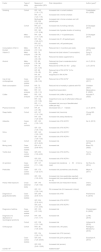
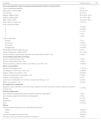
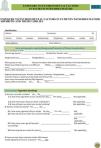
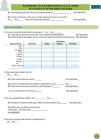
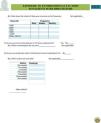
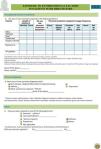
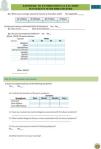
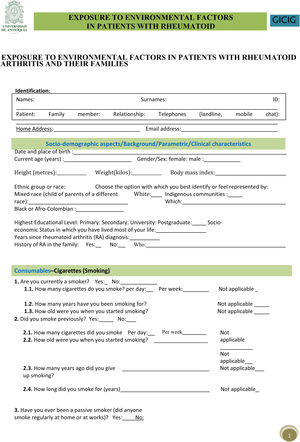
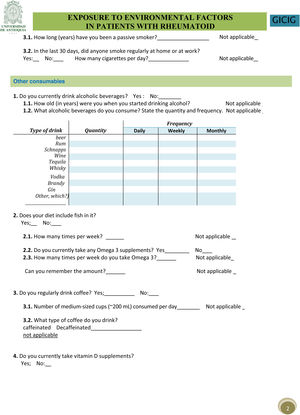
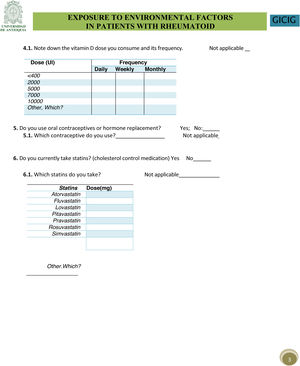
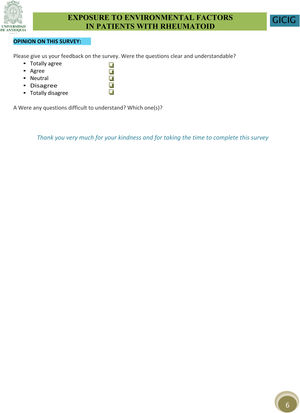
ResultsInstrument to investigate environmental factorsThe literature search yielded between one and seven articles for each risk/protective factor. Twenty-six articles from different countries published from 2000 to July 2023 were selected, of which six were meta-analyses, ten were cohort studies, and ten were case-control studies. The articles selected according to each environmental factor are described and cited in Table 1 (as well as in Appendix B, supplementary material). To develop the instrument, each variable of interest was addressed in the form of interrogative statements called items. Each survey question is a single item, which were grouped into seven different dimensions: socio-demographic aspects, consumables (cigarettes), other consumables, occupational or polluting factors, previous diagnoses, other factors, and questions for potential cases. The final instrument consisted of 89 items (Table 2). The final version of the survey, with its respective items and response options, is found in Table 3.
Published studies evaluating the association between different environmental factors and the development of RA.
| Factor | Type of study | Measure of association (95% CI) | Risk interpretation | Author (year)a |
|---|---|---|---|---|
| Smoking | Cohort | RR: 1.43 (1.16−1.75) | Increased risk in current smokers | Costenbader KH. (2006) |
| RR: 1.47 (1.23−1.76) | Increased risk in former smokers | |||
| Multivariate RR: 2.29 (1.62−3.24) | Increased risk in former smokers and ≥40 packets/year | |||
| Cohort | RR: 2.31 (1.59−3.36) | Increased risk of smoking intensity | Di Giuseppe (2013) | |
| RR: 1.60 (1.07−2.38) | Increased risk of greater duration of smoking | |||
| Meta-analysis | RR: 1.26 (1.14−1.39) | Increased risk (1–10 packets/year) | Di Giuseppe (2014) | |
| RR: 1.94 (1.65−2.27) | Increased risk (21–30 packets/year) | |||
| RR: 2.07 (1.15−3.73) | Increased risk (>40 packets/year) | |||
| Consumption of fish in the diet | Meta-analysis | RR: .76 (.57−1.02) | Reduced risk (1–3 portions per week) | Di Giuseppe (2014) |
| Vitamin D | Meta-analysis | RR: .76 (.58−.94) | Reduced risk (total vitamin D consumption) | Song G. (2012) |
| RR: .76 (.63−.93) | Reduced risk (takes supplement s) | |||
| Alcohol | Meta-analysis | RR: .86 (.78−.94) | Reduced risk (low to moderate alcohol cosumption) | Jin Z. (2014) |
| Cohort | HR: .78 (.61−1.00) | Reduced risk of RA (5.0–9.9g/day) | Lu B. (2014) | |
| HR: .69 (.50−.95) | Reduced risk of RA ACPA+ (5.0 a 9.9g/day) | |||
| HR: .95 (.63−1.42) | Insignificant in RA ACPA– | |||
| Use of oral contraceptives | Case-control studies | OR: .86 (.68−1.09) | Reduced risk of RA ACPA+ | Orellana C. (2017) |
| Statin consumption | Cohort | HR: .72 (.56−.91) | Reduced risk of mortality in patients with RA | Chhibber (2021) |
| Meta-analysis | RR: 1.01 (.93−1.10) | Insignificant association | Myasoedova E. (2020) | |
| Coffee | Meta-analysis | RR: 1.30 (1.04−1.62) | Increased risk (coffee in general) | Asoudeh F. (2022) |
| RR: 1.02 (.97−1.06) | Insignificant (one cup of caffeinated coffee per day) | |||
| RR: 1.11 (1.05−1.18) | Increased risk (one cup of decaffeinated coffee per day) | |||
| Physical exercise | Cohort | HR: .67 (.47−.98) | Decreased risk (>7h/week) | Liu X. (2019) |
| Sleep habits | Cohort | HR: 1.47 (1.12−1.94) | Increased risk (insomnia) | Chung WS. (2018) |
| HR: 1.55 (1.20−2.00) | Increased risk (sleep alterations) | |||
| Asbestos | Cases and controls | OR: 1.20 (1.00−1.40) | Increased risk of RA ACPA+ | Ilar A. (2019) |
| OR: 1.20 (1.00−1.50) | Increased risk of RA ACPA– | |||
| Silica | OR: 1.40 (1.20−1.60) | Increased risk of RA ACPA+ | ||
| OR: 1.30 (1.00−1.50) | Increased risk of RA ACPA– | |||
| Coal | Cohort | OR: 3.60 (2.10−6.20) | Increased risk | Schmajuk G. (2019) |
| Mining (rock) | Case-control studies | OR: 4.12 (2.49−6.81) | Increased risk | Blanc PD. (2022) |
| Textile dust | Case-control studies | OR: 2.50 (1.30−4.80) | Increased risk of RA ACPA+ | Too CL. (2016) |
| OR: 3.50 (1.70−7.00) | Increased risk of RA ACPA– | |||
| Air pollution | Case-control studies | OR: 1.37 (1.11−1.68) | Increased risk (residence≤50m from a road) | De Roos AJ. (2014) |
| Pesticides | Case-control studies | OR: 1.70 (1.22−2.37) | Increased risk (sometimes uses fonofos) | Meyer A. (2017) |
| OR: 1.52 (1.03−2.23) | Increased risk (more pesticides reported) Increased risk (more pesticides reported) : ≥14 vs. ≤5) | |||
| Heavy metal exposure | Cross-sectional study | OR: 1.40 (1.20−1.62) | Increased risk (Cd measured in blood) | Chen L. (2022) |
| OR: 1.31 (1.20−1.44) | Pb increased risk (Cd measured in blood) | |||
| Diagnosis of gingivitis/stomatitis | Case-control studies | OR: 2.96 (2.00−4.37) | Increased risk of RA | Kharlamova N. (2016) |
| OR: 3.24 (2.18−4.81) | Increased risk of RA ACPA+ | |||
| OR: 2.35 (1.51−3.65) | Increased risk of RA ACPA– | |||
| Diagnosis of asthma | Case-control studies | OR: 1.33 (.97−1.83) | Increased risk | Charoenngam N. (2020) |
| Diagnosis of a depressive or neurological syndrome | Cohort | HR: 1.65 (1.41−1.77) | Increased risk | Lu MC. (2016) |
| Cohort | HR: 1.38 (1.31−1.46) | Increased risk | Vallerand IA. (2018) | |
| Chikungunya | Cohort | RR:1.46 (1.04−2.04) | Increased risk (>40 years) | Rodríguez-Morales AJ. (2016) |
| RR: 1.34 (1.05−1.70) | Increased risk of RA (women) | |||
| Case-control studies | OR: 5.40 (1.20−23.80) | Increased risk (joint symptoms) | Essackjee K. (2013) | |
| OR: 5.50 (2.40−12.80) | Increased risk (women) | |||
| COVID-19b | Indeterminatea |
ACPA: Antibodies against citrullinated peptides; HR: hazard ratio; OR: odds ratio; RA: rheumatoid arthritis; RR: relative risk.
Dimensions and number of items investigated in the survey.
| Dimensions | Items | |
|---|---|---|
| 1 | Socio-demographic aspects/parametric/clinical characteristics | 15 |
| 2 | Consumables/cigarettes (smoking) | 15 |
| 3 | Other consumables | 26 |
| 4 | Occupational factors or pollutants | 7 |
| 5 | Former diagnoses | 3 |
| 6 | Others | 17 |
| 7 | For potential cases | 6 |
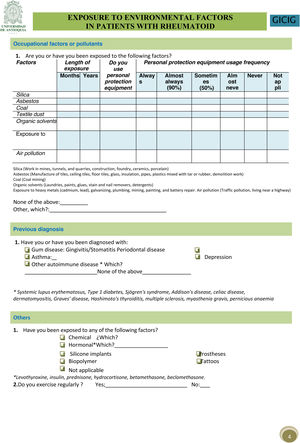
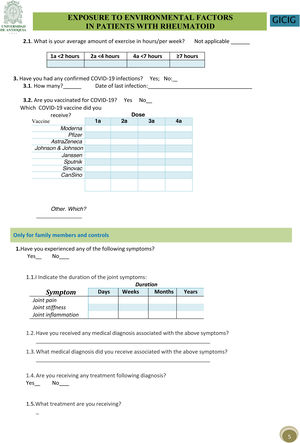
Eleven experts were invited to participate in the survey assessment but only 4 were available to do so. The specific characteristics of the experts are contained in Table 4. In the first evaluation regarding the survey assessment categories: sufficiency, coherence, relevance and clarity (P values of .122, .060, .110 and <.001, respectively) significant differences between experts were only found in the clarity category. After adjusting the instrument based on the experts' assessment, the second evaluation yielded the following p-values for the distribution of the same categories: .254, .819, .921, and .206.
Selection criteria of experts.
The level of agreement between the experts is shown in Table 5. Overall, there was good agreement, as the four categories evaluated obtained values between .60 and .95 for the first evaluation, while in the second, after applying the experts' suggestions, values between .76 and .96 were achieved. Only the coherence category showed no changes between the two evaluations, and the clarity category showed the most notable increase between the two evaluations.
Results of Kendall's W coefficient of agreement between experts for the assessment categories of sufficiency, coherence, relevance, and clarity.
| Categories | First evaluation | Second evaluation | ||
|---|---|---|---|---|
| Expert concordance | P value | Expert concordance | P value | |
| Sufficiency | .73 | <.001 | .76 | <.001 |
| Coherence | .91 | <.001 | .91 | <.001 |
| Relevance | .95 | <.001 | .96 | <.001 |
| Clarity | .60 | <.001 | .81 | <.001 |
A total of 30 people participated in the pilot test, 77% of whom were women (n=23) aged 44 years or younger, most frequently from socioeconomic stratum 3 and with varied educational levels. Ninety-three percent (n=28) were healthy, and regarding the factors studied, only 3% (n=1) smoked at the time of the survey. Over 80% regularly consumed fish and coffee, while only 23% (n=7) took vitamin D supplements (Table 6).
Dimensions assessed in the 30 pilot test participants.
| Variables | Frequencies (n=30) |
|---|---|
| Socio-demographic aspects/background/parametric/clinical characteristics | |
| Type of participant/patient e | 2 (7%) |
| Age (years), median (IQR) | 44 (32−58) |
| Sex, female | 23 (77%) |
| Weight, median (IQR) | 63.5 (56.0−72.0) |
| Height, median (IQR) | 161 (155−168) |
| BMI, median (IQR) | 24.6 (22.4−26.1) |
| Ethnic group, mixed race | 17 (57%) |
| Socio-economic status | |
| 2 | 10 (33%) |
| 3 | 12 (40%) |
| 4 | 5 (17%) |
| 5 | 2 (7%) |
| 6 | 1 (3%) |
| Level of education | |
| Primary | 2 (7%) |
| Secondary | 7 (23%) |
| University | 11 (37%) |
| Postgraduate | 10 (33%) |
| Rheumatoid arthritis diagnosis, yes | 2 (7%) |
| Years of diagnosis, median (IQR) | 21 (7−35) |
| Do you or did you have family members with rheumatoid arthritis? Yes | 7 (23%) |
| Consumables/cigarettes (smoking) | |
| Do you currently smoke? Yes | 1 (3%) |
| Did you smoke previously? Yes | 7 (24%) |
| Have you been a passive smoker at any time in your life?, Yes | 15 (68%) |
| Other consumables | |
| Alcoholic beverages, Yes | 11 (37%) |
| Consumption of fish in your diet, Yes | 27 (90%) |
| Regular coffee consumption, Yes | 25 (83%) |
| Vitamin D supplement consumption, Yes | 7 (23%) |
| Omega 3 consumption, Yes | 2 (7%) |
| Use of oral contraceptives or hormone replacement therapy, Yes | 3 (10%) |
| Statin consumption, Yes | 3 (10%) |
| Occupational or pollutants | |
| Exposure (silica, asbestos, coal, textile dust, organic solvents, exposure to heavy metals, air pollution) | 11 (37%) |
| At least one | |
| Previous diagnoses | |
| Gum disease: gingivitis/stomatitis, periodontal disease, depression | 1 (3%) |
| Gum disease: gingivitis/stomatitis and depression | 2 (7%) |
| Asthma | 5 (17%) |
| Depression | 6 (20%) |
| None | 16 (53%) |
| Others | |
| Have you been exposed to any of the following factors? | |
| Tattoos | 12 (40%) |
| None | 18 (60%) |
| Do you take regular exercise? Yes | 18 (60%) |
| Have you had any confirmed COVID-19 infections? | 7 (23%) |
BMI: body mass index; IQR: interquartile range.
This pilot test provided feedback on the survey, specifically regarding the lack of clarity regarding two terms, “control” and “statins”. Both aspects were corrected in the final version of the instrument. The completion time averaged 10min per person.
Discussion and conclusionsThis study developed and validated a data collection instrument to identify variables associated with RA, specifically environmental variables. A rigorous methodology was used, including a review of scientific literature, expert participation, a pilot test with volunteers, and analysis using relevant methodologies to verify the development of a sound instrument and its content validity through expert assessment of its adequacy, coherence, relevance, and clarity.30 The results demonstrated good levels of adequacy, coherence, relevance, and clarity, making it a useful tool for future research addressing this disease in Spanish-speaking populations, both in patients with RA and in potential individuals at risk for this autoimmunity. The latter would include those without clinical symptoms who have high ACPA titres, those who present with non-specific joint symptoms, or first-degree relatives of patients with autoimmune diseases.
A variety of epidemiological studies have used diverse instruments to collect data on environmental and lifestyle factors in RA. For example, the EIRA study in Europe employed surveys to assess exposure to factors such as smoking and diet.31 In the United States, an RA prediction model using data from the National Health and Nutrition Examination Survey (NHANES) found associations between RA and factors such as age, sex, body mass index, and depression.32 In Sweden, a study confirmed the link between smoking and RA, as well as other risk factors such as insulin treatment.33 In Latin America, a Brazilian study identified associations between RA and hepatitis B vaccination, cow's milk consumption in childhood, use of chemical hair products, and physical activity.34 There are threfore multiple modifiable and non-modifiable factors that could be differentially contributing to the development of the disease in different populations around the world. Furthermore, there is no evidence of validation processes for the instruments used in the studies cited as rigorously as the one applied in this study.
We believe that the systematic and simultaneous study of environmental variables associated with protection against or risk of developing RA is highly relevant for understanding the potential impact of these factors on key molecular alterations, such as the epigenetics of the disease, which defines the differential expression of risk alleles. However, this multidisciplinary approach has been scarce in Latin America, as evidenced in our literature review, as most studies have focused on Europe and the United States, populations that differ from our cultural heritage, customs, and eating habits. Therefore, the survey created and validated in this study responds to the need for relevant instruments adapted to the Latin American culture and the language of our region.
This work guaranteed the inclusion of relevant environmental variables in RA as a solid basis for constructing the instrument. Furthermore, the participation of a panel of rheumatology experts confers greater credibility and validity to the proposed survey. However, the low response rate from experts in the content validation process poses certain limitations regarding the representativeness of expert opinions. Despite this, the high level of agreement and concordance in most of the categories assessed by experts stands out, supporting the instrument's validity. Furthermore, the pilot test with volunteers provided additional feedback on the clarity and comprehension of the survey. Taken together, these results support the validity and reliability of the data collection instrument developed in this study, providing a robust and reliable tool for future research on environmental factors associated with RA.
Data confidentialityThe data supporting the findings of this study are available upon reasonable email requests.
FundingThis study was funded by the Ministry of Science, Technology, and Innovation (MINCIENCIAS, Bogotá, Colombia) and the University of Antioquia. It is part of the research project “Multifactorial predictive model for the development of rheumatoid arthritis based on the expression of human endogenous retroviruses,” code 111589785974.
The authors have no conflict of interests to declare regarding this study.
Wilson Bautista-Molano, MD, internist, rheumatologist, Santa Fe de Bogotá Foundation University Hospital, El Bosque University.
Adriana Rojas Villarraga, MD, internist, rheumatologist, epidemiologist, Professor and Researcher at the University Foundation of Health Sciences.
Miguel Antonio Mesa Navas, MD, internist, rheumatologist, rheumatologist at Clínica Somer and Clínica del Rosario, head of the national research line of SURA rheumatology.
Sebastián Herrera, MD, internist, CES University - Valle de Lili Foundation, rheumatologist, University of Antioquia. Professor attached to CES University.
The following is Supplementary data to this article: